
5 mistakes self-taught composers make
I see the same 5 mistakes over and over from self-taught composers. They affect your music, your confidence and your chances of getting performances and commissions. Here's each one, and how to fix it.
 By Saad Haddad, composer
Here's the video this post comes from (13 minutes), or you can read it below.
- Your body of work is all over the place
- You're stuck in learning mode
- You write new pieces just for competitions
- You're writing a dream piece
- You're trying to do it all alone
1. Your body of work is all over the place
Imagine there's a new restaurant in your town that has an entirely different menu every single day. One day they only serve tacos. The next day it's all grilled cheese sandwiches. The day after that, only salads.
When are you actually likely to go to this restaurant? I like to know what I want to eat before I pick the restaurant, so I'd probably never eat there.
A lot of self-taught composers feel like they always need to be original, and they end up writing music like the chef at that restaurant. One piece is serialist, the next is written to sound like Bach, the next one is neo-romantic.
- MondayTacos
- TuesdayGrilled cheese
- WednesdaySalads
- Piece 1Serialist
- Piece 2Sounds like Bach
- Piece 3Neo-romantic
There's nothing wrong with being interested in many types of music. But musicians want to know what type of music they're going to get from a composer before they pick that person for a commission. Composers whose body of work is all over the place don't get nearly as many commissions as they otherwise could.
How to fix it
Pick out what I call your aesthetic menu. This doesn't mean you have to lock yourself into one style of music. A restaurant can serve more than one type of dish, and you can have different types of music that you want to write. What you do need to make sure of is that when musicians come to you, they know exactly what styles they can pick from.
When musicians come to you, they know exactly what styles they can pick from.Your aesthetic menu
2. You're stuck in learning mode
This one is sneaky because it feels productive. Let's say you want to start running. You go on a few runs, and it kind of sucks. You're slow, you're out of breath, and you don't really know how to improve. So you research. You read about running technique, you watch YouTube videos, you learn about foot strike, cadence and breathing.
Now you have a lot of information about running. But until you actually go run again, none of that makes you a better runner.
Composition works exactly the same way. When writing feels hard, and it always does at first, a lot of self-taught composers retreat into what I call learning mode. They read theory books, they do counterpoint exercises, they practice ear training. All terrific things for your development as a musician. But studying music is not the same as writing music.
- Theory books
- Counterpoint exercises
- Ear training
More knowledge
- Notes on a page
- Even if it's messy
- Even if it's 8 bars
More composing skill
So when they finally sit down to compose again, they might have more knowledge, but they don't have more composing skill. They'll say things like, "I've studied so much. Why can't I actually write?" That frustration is one of the fastest paths to burnout.
How to fix it
Next time you feel the urge to open a theory book, take that same block of time and just write. Even if it's messy, even if you think it's bad, even if you only get 8 bars.
Being able to label a Neapolitan chord will never matter as much as the number of hours you've actually spent putting notes on a page. If you're serious about improving, aim for 6 to 10 hours a week of actual composing time.
3. You write new pieces just for competitions
You can write 10 hours of music a week and still end up with music that never gets performed.
This happened to a student of mine. He found a choral competition that matched his style, got excited, and spent a full month writing a brand new piece just for that contest. He sent it in, waited 3 months, and got rejected.
The competition was his only performance plan. So when he didn't win, the piece had nowhere to go. It just sat on his hard drive.
- 1 monthwriting a brand new piece for one contest
- 3 monthswaiting
- Rejectedthe piece has nowhere to go
- Hard drivewhere it sits
There's another issue people don't talk about. A lot of competition pieces are written to fit very specific guidelines: duration limits, instrumentation, difficulty level, theme requirements. If you don't win, you're left with a very specific piece that only works in a very specific context. I call this writing yourself into a corner.
And most competitions in concert music aren't designed for beginners. They're usually looking for early career professionals who already have a clear voice and a track record of performances. So beginners, and often self-taught composers too, can spend huge amounts of time and often money submitting pieces they're statistically very unlikely to win.
How to fix it
I tell my students who work one-on-one with me to never write brand new pieces specifically for competitions.
You don't need to win competitions to be a real composer. You become a real composer the moment you start writing notes on a page. Real progress comes from actually getting your music played by real musicians.
4. You're writing a dream piece
I learned about this one the hard way. Back when I was 14, and had barely written more than a handful of pieces, I decided I was ready to write my first ever symphony. I creatively decided to title it Symphony No. 1.
You can probably guess what happened next. It was never performed. Looking back, I can see why. It took me forever to write. I didn't have the technique to really pull off what I was imagining. I didn't walk away with skills I could clearly use in my next piece. And I definitely didn't have access to an orchestra that was going to play a teenage composer's first symphony.
That piece wasn't a step forward. It was a stall.
A dream piece sounds inspiring to work on, but the problem is right there in the name. It's a dream. If you're dreaming of writing a 45-minute symphony, but you've never written for strings and don't know a single conductor, you're skipping 10 steps ahead of where you actually are right now.
How to fix it
The fastest growth happens when the music you're writing matches the musicians you actually have access to. Do you know a great flutist? Write for flute. Do you have a pianist friend? Start there.
The musicians who are already in your life are far more likely to play your music than strangers on the internet. So write a real piece, one that someone you know could actually play in the next year.
Remember that student who wrote the choral piece for the contest he didn't win? He shifted his approach. All he did was reach out to musicians he already knew to ask if he could write pieces for them. By doing just that, he set up 10 new pieces to write in 2026, all of which are guaranteed performances. That's more performances than he ever had before, combined.
5. You're trying to do it all alone
If I had to pick out one single root problem that holds most self-taught composers back, it's this. They try to build an entire composing career completely on their own.
Developing as a composer is like building a house. Your musical voice, your workflow, your opportunities for performances and commissions: each of those is like a room in the house. Would you trust yourself, with zero construction experience, to do it all alone? Or would you want experienced builders and an architect helping you in the process?
A lot of self-taught composers assume that because they're self-taught, they're supposed to do everything by themselves. They have this notion that composers in history just took walks in the park, came back to their little studio, wrote things down by themselves, and then magically had their pieces played.
But composing isn't meant to be a solo activity. Your music exists to be played by other people.
How to fix it
Bring other people into the process early and often. When you have real musicians expecting a piece from you, things change. If you've lined up 6 pieces this year with performers who are excited to play them, you can't just drift or give up.
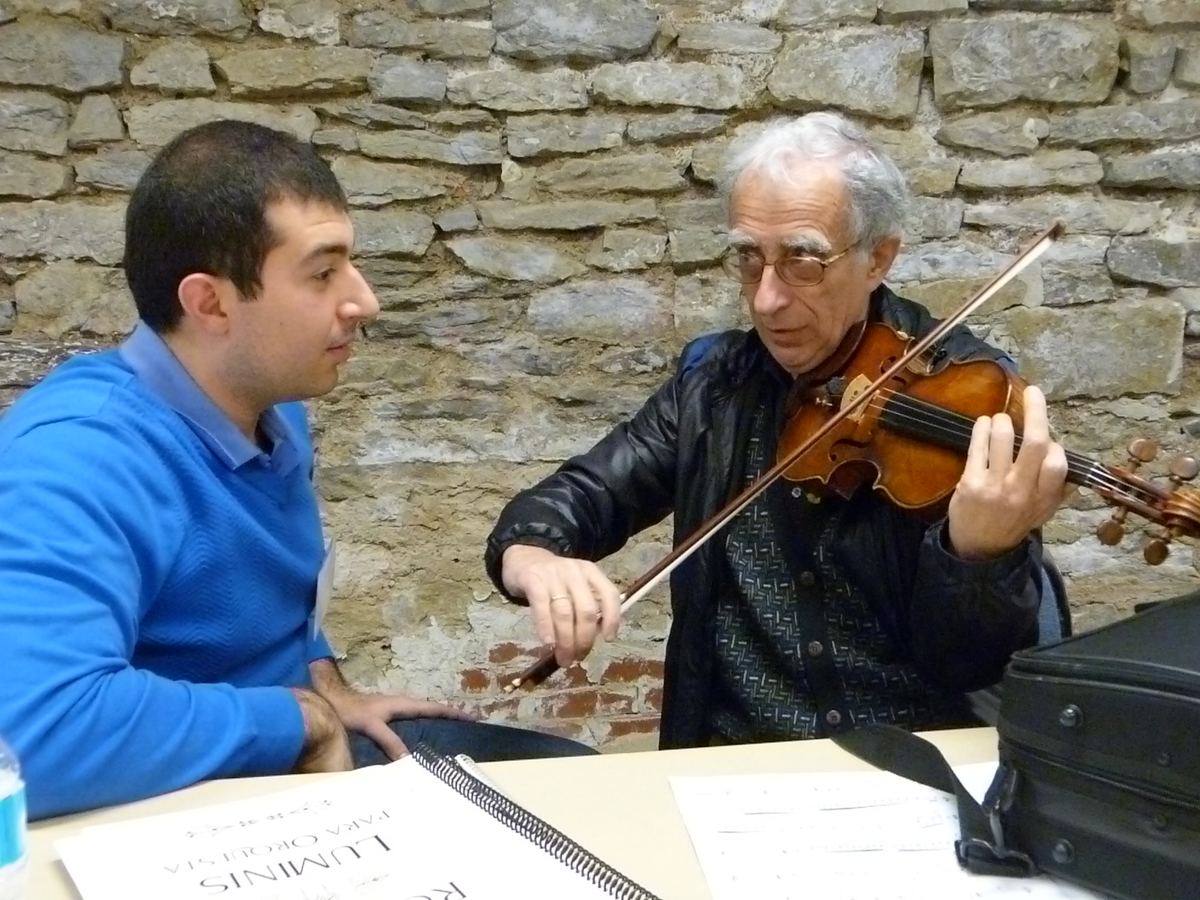
And when you workshop pieces in progress with performers, you get feedback you simply cannot generate on your own. They show you what feels great to play, what they connect with emotionally, what they're excited to perform. That teaches you faster than any book what kind of music you should be writing.
Being self-taught doesn't mean being alone.
What to do next
If the first mistake sounded like you, start with my free guide to defining your compositional voice. It will help you figure out exactly where you are as a composer and what to work on next.