
How I'd become a concert composer if I were starting fresh
Starting a composing career today is nothing like it was 20, 10 or even 5 years ago. If I had to do it all over again, I'd skip a ton of the things I see composers still wasting their time on. Here are the 7 steps I'd take to become a concert composer who gets commissioned, performed and recognized, without losing years chasing the wrong things.
 By Saad Haddad, composer
Here's the video this post comes from (11 minutes), or you can read it below.
- Just start composing
- Begin with solo pieces written on a single staff
- Connect with other composers and musicians right from the start
- Seek feedback while you're still writing
- Study the music that truly excites you
- Start your compositions with pencil and paper
- Keep composing fun
1. Just start composing
This first step is the one that will make the biggest difference in how often your music actually gets performed.
Many composers feel like they need permission or the perfect idea before they start writing music. But waiting around won't help you improve.
Most people think inspiration has to strike first, but it's really the other way around. Fire doesn't start with heat. It starts with friction. You have to strike something to make it start burning.
- For permission
- For the perfect idea
- For inspiration to strike first
Won't help you improve
- It doesn't have to be great
- It's okay if nobody hears it just yet
- Quiet, focused time
Building the habit
What I'd do instead
The first thing I'd recommend is just start composing. It doesn't have to be great. It's okay if nobody hears it just yet. At this early stage, what matters most is building the habit and learning to trust yourself.
They do have their use cases, but reading theory books or orchestration textbooks doesn't replace having quiet, focused time to explore your own musical ideas, no matter how unsure you feel about them initially.
Prioritize these precious pockets of composing time. Even starting with just 30 to 45 minutes a day makes a huge difference over time.
2. Begin with solo pieces written on a single staff
Once you've committed to composing about 30 to 45 minutes a day, the next question becomes, what should you be doing during that time?
A lot of composers immediately want to start with orchestral music, and I completely understand why. Writing for orchestra is incredibly exhilarating. A couple years back I wrote for the Los Angeles Philharmonic, and I was the composer-in-residence for the California Symphony. These experiences, alongside all the other orchestral performances I've had, are very meaningful to me.
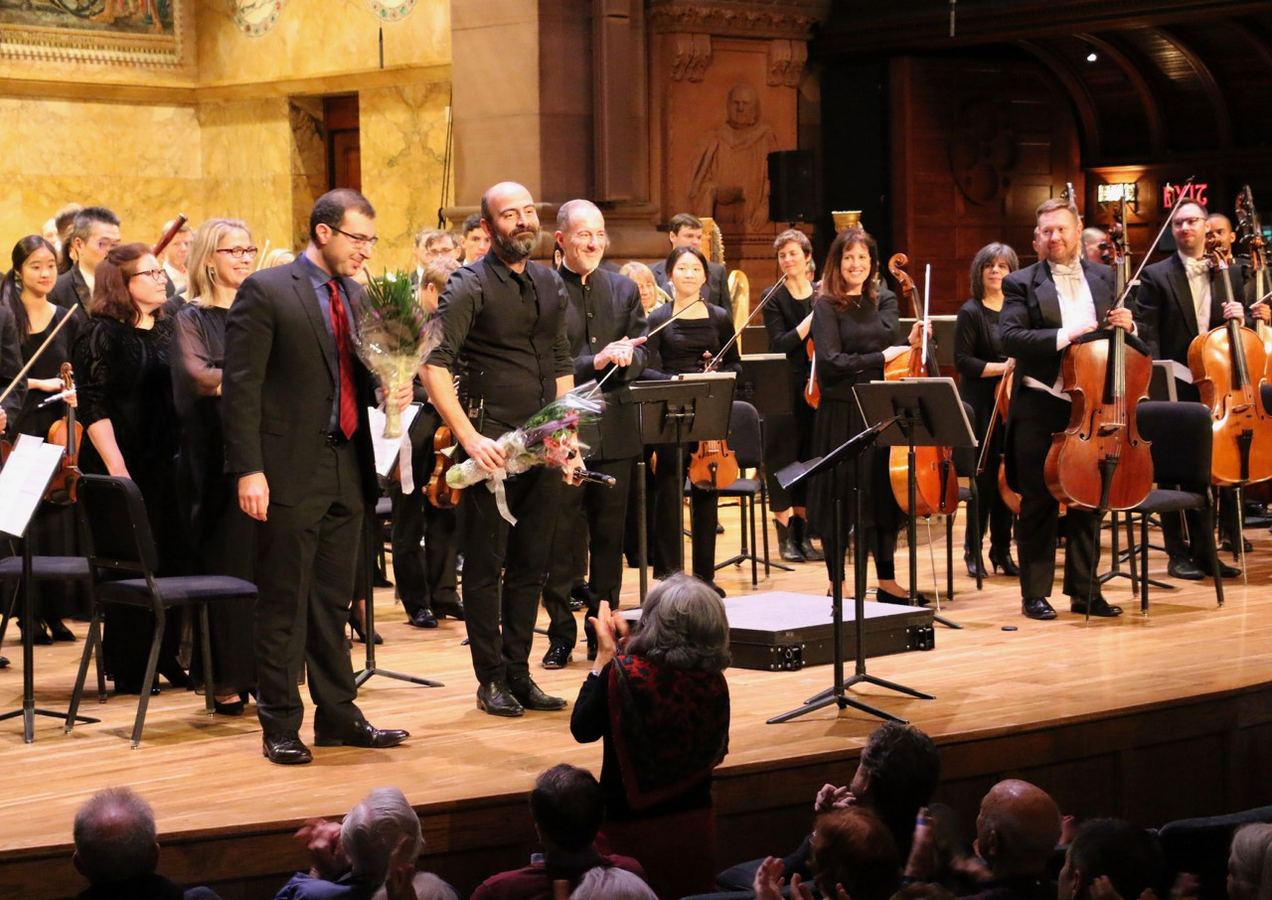
But I want to share something most composers aren't told early on. Writing for orchestra takes a very, very, very long time. Not just the actual composing, but the revision process, the engraving and the sheer amount of detail that's required in that kind of work.
One orchestral piece can take months, if not years, of focused work, and sometimes it's only performed once, or even never at all.
If you start with smaller pieces instead, you can finish many more works in that same span of time. And each finished piece you write is a chance to learn, to collaborate and to grow as a composer.
- Months, if not years of focused work
- Sometimes only performed once
- Or even never at all
- Many more works in that same span of time
- More opportunities for live performance
- Each finished piece is a chance to learn
What I'd do instead
If I were starting fresh, I'd begin with solo pieces written on a single staff, for instruments like the flute, violin, trumpet or clarinet. The specific instrument really doesn't matter that much at this stage. What matters is that you're learning how to express your own musical ideas clearly and directly through these instruments.
From there I'd expand gradually. Solo to duo, duo to trio, trio to quartet, then to larger chamber ensembles, and then eventually to the orchestra.
It's worth considering that many of the most enduring pieces in history are solo pieces. Think about Bach's cello suites, Paganini's caprices for the violin, Berio's Sequenzas for all the various instruments and voice. My own solo trumpet work was premiered alongside Berio's Sequenza for trumpet.
So even though I'm writing orchestral commissions, I still find it extremely important to be writing these solo and smaller pieces in between the larger commissions, to keep my chops up and to keep my relationships with individual performers alive.
These solo works aren't just warm-ups for something grander that you'll write later on. They're legitimate pieces that reveal your musical identity and sharpen your ear. They'll help you develop your ability to write line, shape and form in a very focused way.
The best part is that starting with smaller forces will enable you to finish more pieces each year, have more opportunities for live performance, and refine your musical voice through repetition and feedback.
And when the time comes to write for orchestra, the process will feel clear and manageable, because you'll have already built the craft and confidence needed for that scale of writing. When you've written for flute, adding piano is relatively straightforward. When you've written trios and quartets, an orchestra no longer feels out of reach.
This is how your orchestral music is written in a way that leads to real performances. You grow into it piece by piece, not all at once.
3. Connect with other composers and musicians right from the start
Step 3 tackles one of the biggest challenges composers face today, and it's the key to improving much faster than you would on your own.
If you're building a career as a concert composer, isolation can be especially brutal. It eats away at your confidence, separates you from the broader musical community, and makes you feel like you're writing in a vacuum.
What I'd do instead
If I were starting fresh, I'd make it a priority to actively connect with other composers and musicians right from the start. I'd look for local communities or groups where people share my passion for concert music.
You can easily do this by attending small concerts, especially concerts with around 20 people in the audience and just a few performers, where conversations with musicians happen naturally. Or find free recitals hosted by your local university music department.
The key really is to start somewhere, no matter how small, and let your community grow from there.
You don't improve in isolation.
You'll grow faster, gain confidence and become a stronger composer when you're regularly interacting with people who care about music as deeply as you do. These connections help you find your blind spots, refine your skills, and keep you inspired and motivated.
- Eats away at your confidence
- Separates you from the broader musical community
- Makes you feel like you're writing in a vacuum
- Help you find your blind spots
- Refine your skills
- Keep you inspired and motivated
4. Seek feedback while you're still writing
Step 4 is one that most composers skip, even though it's often the thing that makes the biggest difference in how far their music actually goes.
A lot of composers wait until a piece is finished before bringing anyone else into the process. But by then, it's usually too late to make meaningful changes without questioning everything.
What I'd do instead
Seek feedback from someone you trust while you're still writing, right in the middle of your creative process.
When you do this, your mind stays sharp and aware of exactly why you're making each musical decision. You'll be able to clearly explain the choices to the person giving feedback. And that conversation will often give you greater clarity about your own process and stylistic tendencies.
- Usually too late to make meaningful changes
- Without questioning everything
- Your mind stays sharp
- You can clearly explain the choices
- Greater clarity about your own process
Here's something a bit vulnerable about myself. I haven't personally taken a private composition lesson since 2019, which is more than 5 years ago now. But I still make it a point to seek feedback on my music regularly.
Sometimes it's from my composer friends who know my work well. Sometimes it's from musicians and conductors I collaborate with. And probably most often it's from my spouse, who I constantly ask to come down and check my work.
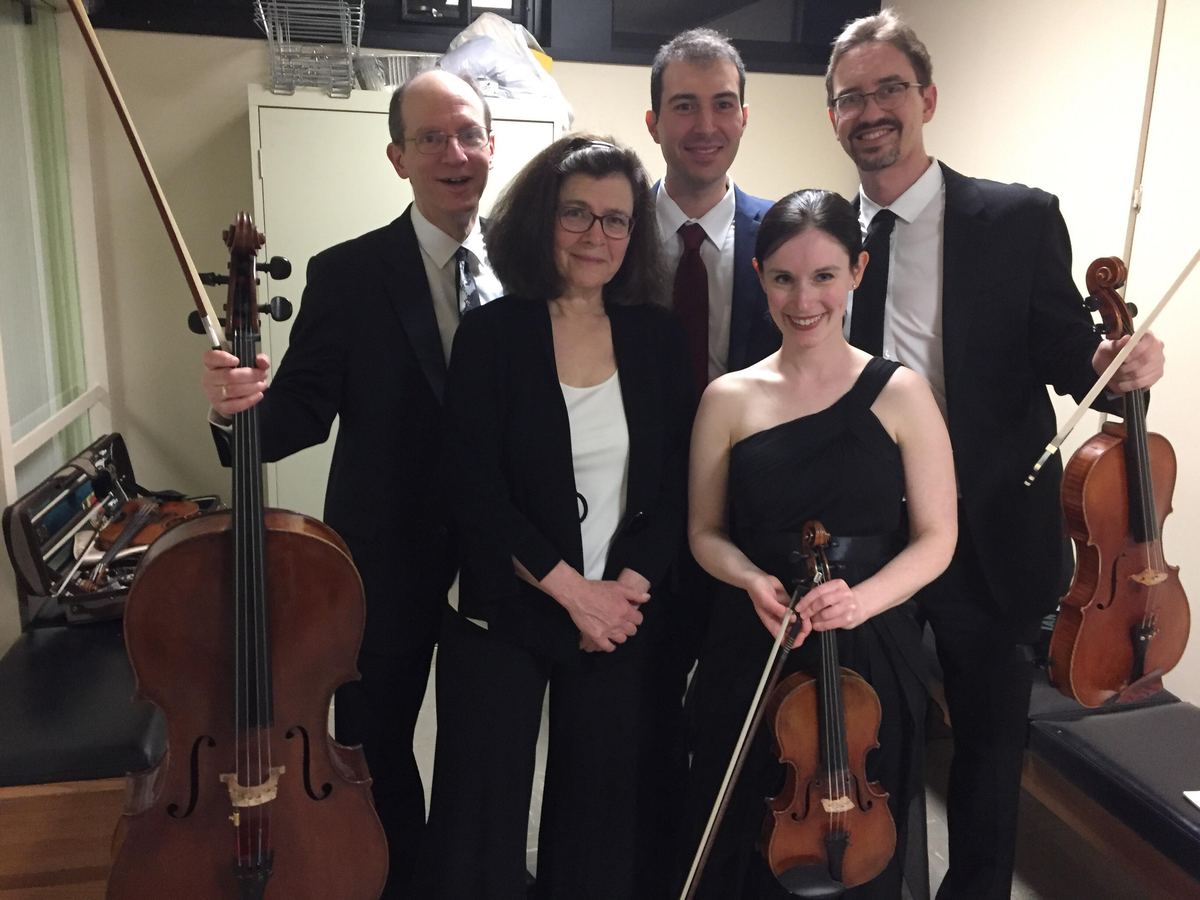
The point I'm trying to make is that I'm not doing any of this alone, and I wouldn't want to either.
Even if you're getting regular feedback, that doesn't mean you have to take every suggestion that someone gives you. Even feedback you disagree with can spark new ideas or open up a direction you wouldn't have discovered on your own.
The crucial thing is that this ongoing dialogue helps you discover and refine your personal musical voice. And that unique voice is what makes musicians excited to perform your work live.
5. Study the music that truly excites you
This step changed everything for many of my own students. After embracing it, they stopped wasting their time trying to find their artistic voice and instead started developing it through the music they actually love.
That shift alone led to real results. Things like festival acceptances, performances and commissions that finally felt authentic to them.
So here's your main takeaway. Don't try to study every major composer in the canon. That completist mindset only slows you down and dilutes your creative energy.
What I'd do instead
Study the music that truly excites you, even if no one else around you seems to understand why. Whether it's music from the late Renaissance, the Second Viennese School or the Fluxus movement, it really doesn't matter.
Build a personal library of scores and recordings that simply light you up, and then work out exactly why they resonate with you.
An example of this in action
One of my students' biggest musical heroes is Charles Ives, one of the true titans of early 20th century American music. But when I asked why he wasn't incorporating Ives' mannerisms into his own work, he admitted he'd never thought to actually use the same techniques that Ives used. The thought simply hadn't occurred to him, even though he adored the music.
I encouraged him to go down the Ives rabbit hole, to really embrace that influence and identify what he loved about it, whether it was the harmony, the rhythm or the spirit behind it. His writing changed completely.
Just a few months later, his new music, now infused with those influences, was being premiered in his hometown of Boston, with more performances already underway.
- Charles Ivesone of his biggest musical heroes, but he'd never thought to use the same techniques
- The rabbit holeidentify what he loved about it: the harmony, the rhythm, the spirit behind it
- A few months laterhis new music was being premiered in his hometown of Boston
So the bottom line is this. Don't shy away from what inspires you. Lean into it. Your authentic voice is your greatest asset as a composer.
If you want to work out this step on your own, I've created a free worksheet that you can download.
6. Start your compositions with pencil and paper
Step 6 is going to help you move past impostor syndrome by simplifying your actual writing process.
Even with all the amazing tech, AI tools and powerful notation software available, I still strongly recommend starting your compositions with pencil and paper.
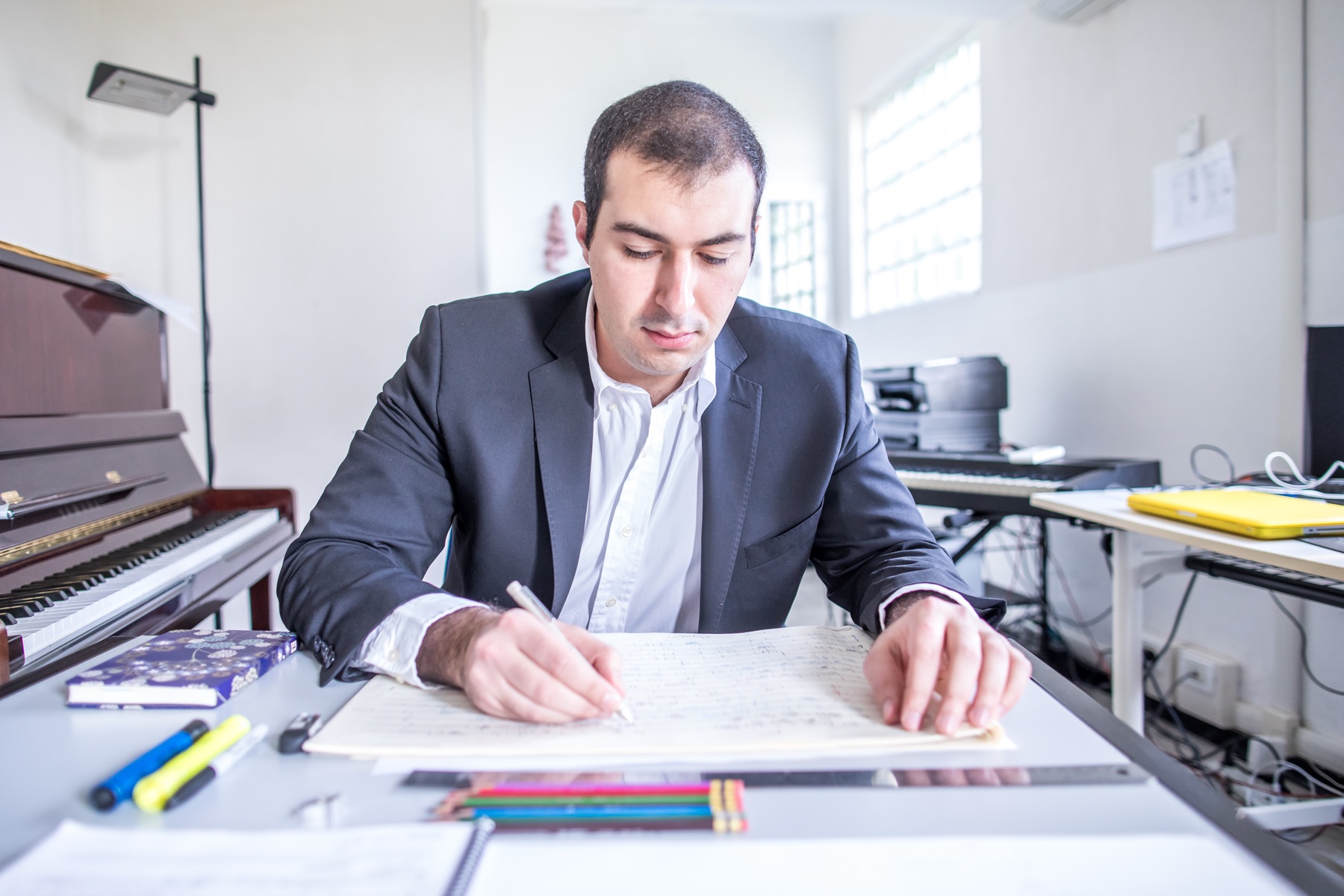
To be clear, writing on paper first doesn't mean you have to write everything purely from imagination. You should absolutely use the piano, your voice, your instrument, anything that helps you hear the ideas as you go.
That's what composers like Beethoven and Stravinsky have always done. They weren't simply pulling music out of thin air. They were listening, testing and shaping the music as they wrote.
When you write by hand, the music forms through your ear, your hand and your physical sense of gesture. You build muscle memory for the musical shapes that feel right to you. You get to feel the music as it takes form instead of just looking at notes on a screen, which is wholly uninspiring if you ask me.
When to move to the computer
Technology and software are still really important. We're just using them at the right stage.
When you have a section, a sketch or a passage that feels formed, then you bring it into your computer. And that's where playback is most useful.
Playback isn't there to guide the writing measure by measure. Playback is there to help you hear the pacing and shape of the larger sections, so you can refine structure without getting influenced by the small details too early on in the process.
So start on paper first. Use your piano, electronic keyboard or any other instrument as much as you need. Then move to the computer once something is ready to be shaped at a broader scale.
- Paperstart on paper first
- Pianoor any other instrument, as much as you need
- Computeronce something is ready to be shaped at a broader scale
- Playbackto hear the pacing and shape of the larger sections
You'll find that this simple habit gives you clarity, a deeper connection to your own musical language, and a much more confident composing process.
7. Keep composing fun
For all of this to work, this whole process is supposed to be my favorite f-word, which is, you guessed it, fun.
Yes, building these habits and practices takes time and effort. But at the end of the day, creating concert music that you truly believe in, music that gets performed, commissioned and recognized, is one of the most rewarding things that you can do as a composer.
And here's probably the most important idea in this entire post.
If composing ever stops being fun, that's your signal that something's off track.
What to do next
Developing a clear, personal voice is one of the biggest keys to becoming a composer whose work gets performed and commissioned regularly, so start with my free guide to defining your compositional voice.