
My music composition portfolio that got accepted to Juilliard
Here's the composition portfolio I sent when I applied for my bachelor's degree way back in 2010, piece by piece. It'll give you a sense of what the undergraduate college admissions process is expecting. The admissions folks are not expecting anything masterful, but they do want to hear music that they feel has potential.
 By Saad Haddad, composer
Here's the video this post comes from (10 minutes), or you can read it below.
- This portfolio did not get me into several other colleges
- What the undergraduate admissions process is expecting
- My first piece: a melody with a few drones in the background
- The next piece: a work for chorus
- A high-level recording hides a lot of imperfections
- My third and final piece: my orchestral work for the LA Phil
- Your portfolio should have these 3 things
This portfolio did not get me into several other colleges
Some of you asked to see my composition portfolio from when I applied for my bachelor's degree way back in 2010. This is the portfolio that got me accepted to Juilliard, USC, Columbia and some other places. Thankfully, I ended up going to USC, though eventually I did go to Juilliard for my master's.
Though I should say, for transparency's sake, that this portfolio did not get me into several other colleges, including UCLA, Harvard and Yale.
Several other colleges
My bachelor's degree
Funny story about one of those colleges. Even though I got rejected back in 2010 to be in UCLA's bachelor's program, over 10 years later their student orchestra played my orchestral music.
There you go. You never know where life leads you.
- 2010I applied for my bachelor's degree
- Rejectedto be in UCLA's bachelor's program
- Over 10 years latertheir student orchestra is playing my orchestral music
What the undergraduate admissions process is expecting
I have to warn you before we get going. These pieces were written way back in 2008 and 2009, and they don't reflect my compositional style today at all.
Nevertheless, I believe it's important to show you where I started and, more importantly, give you a sense of what the undergraduate college admissions process is expecting.
This is by no means a portfolio for those aiming to get a graduate degree in composition.
You'll see quite clearly from these 3 pieces that the admissions folks are not expecting anything masterful.
They do want to hear music that they feel has potential, and that's really the key word here.
My first piece: a melody with a few drones in the background
The first piece in my undergraduate portfolio is scored for alto flute, bass clarinet, B-flat clarinet, violin, cello and piano.
It's not the most nicely presented score, but it's very clear. And all the ideas are pretty simple.
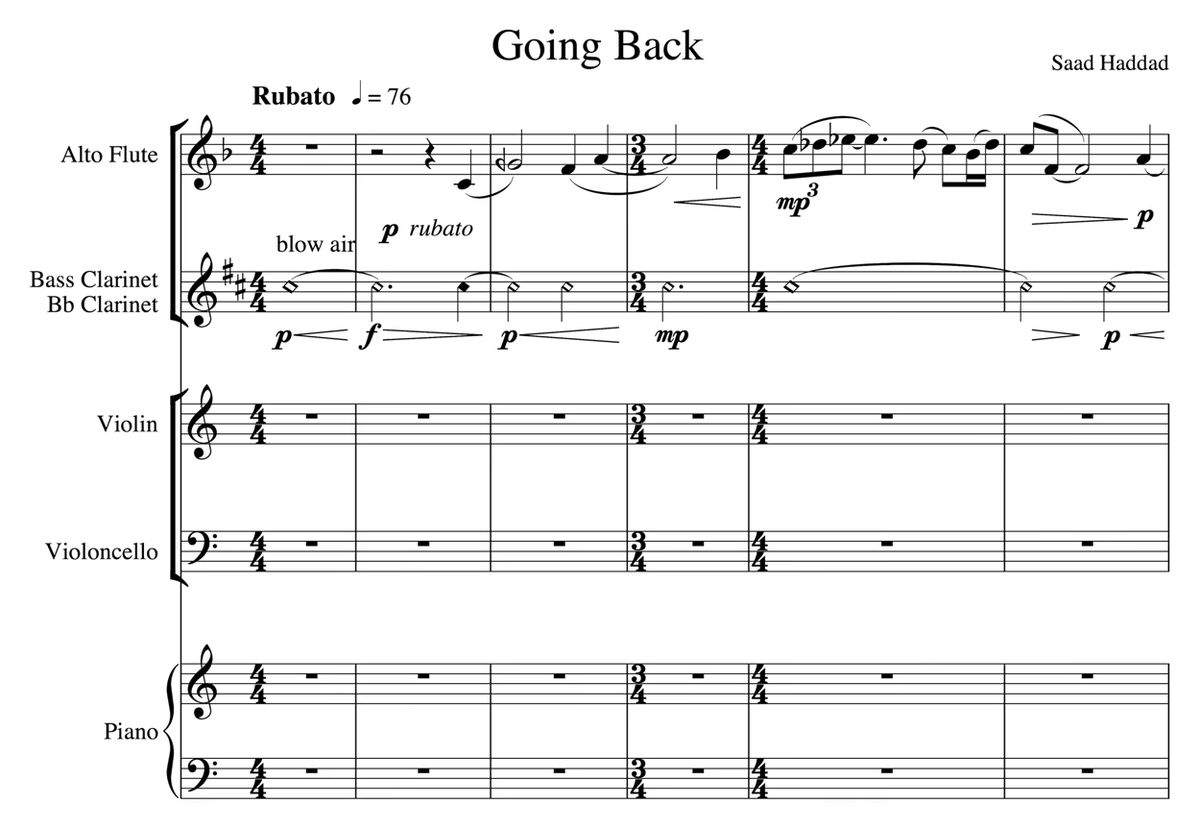
I have a very straightforward idea with the clarinet blowing air, and then the alto flute having this melody with some quarter tones sprinkled in. So at least that showed some facility with quarter tones, even at that early time.
Then the melody changes to the cello, with just a little bit of imitation going on, and the clarinet adds some low sound to the mix.
There's nothing that special about it. It's just a melody with a few drones in the background. I wouldn't say it's anything masterful, but it's showing signs of what I would do in the future, even in this very early piece.
About 2 minutes into the whole piece, it shows how you'd transition to a completely new section, a completely contrasting section. It shows the different techniques, with the key slap in the flute and different rhythms in the piano. This is the first time the piano even comes in, and it has a kind of cluster-like situation going on.
- 1A very straightforward ideaThe clarinet blowing air, and the alto flute having this melody with some quarter tones sprinkled in.
- 2The melody changes to the celloJust a little bit of imitation going on, and that low tone with the clarinet.
- 3About 2 minutes in, a completely contrasting sectionThe key slap in the flute, different rhythms in the piano, and the first time the piano even comes in.
A good stepping stone
I have to admit, I'd never want to hear this piece played ever again. But it was a good stepping stone for me to learn how to notate music, as well as work with conservatory-trained musicians.
The next piece: a work for chorus
The next piece from my portfolio is quite a contrast from the last one. It's a work scored for chorus, with text by the American poet Wallace Stevens.
Here I split the voices between alto and bass, and soprano and tenor. Right off the bat, it shows the admissions folks what you'd do with a voice. You wouldn't just have all of them singing at the same time. You'd split them up into these 2 sets of voices. At least that's what I did.
Then I have them all together, with this imitation going on. And then it's tenor and bass together, and soprano and alto together.
So right in the first minute, you're showing how you would put the voices together.
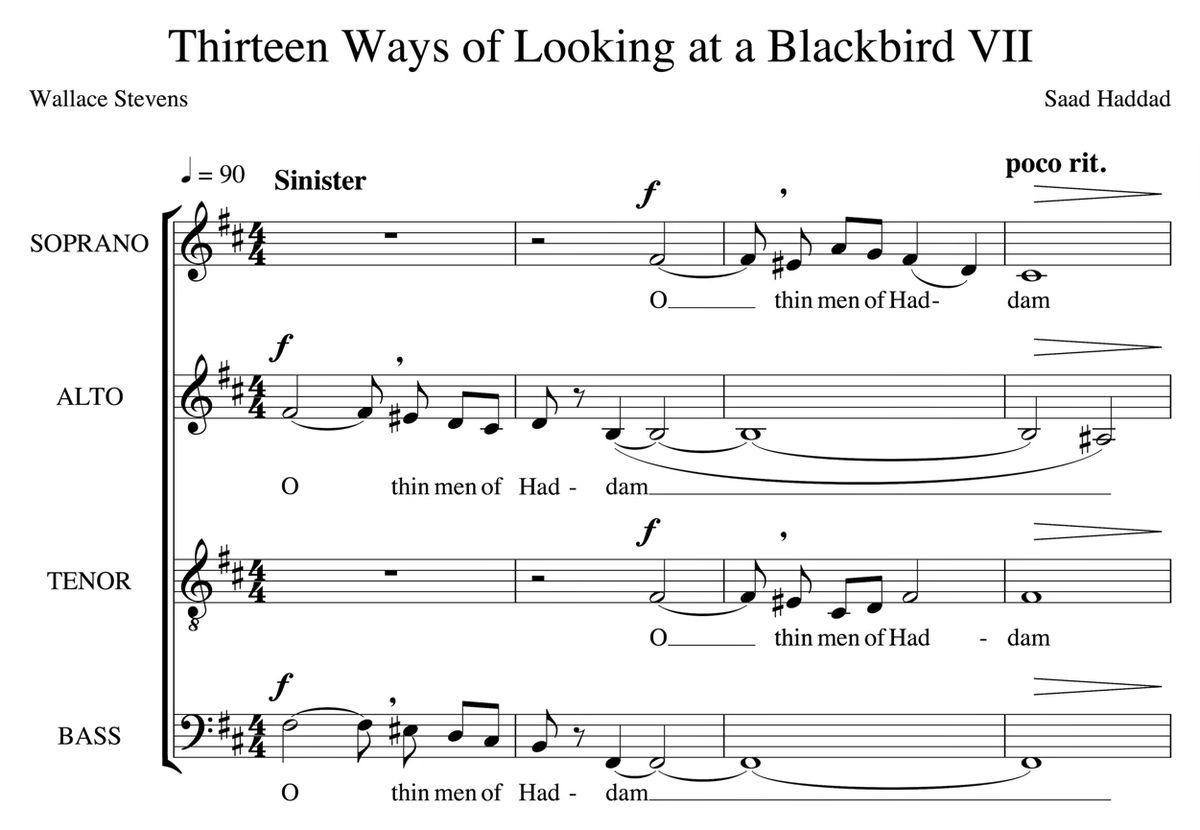
There's also a rhythmic interplay that happened in my first piece as well. I had the rhythm occur about a minute into the piece, which I didn't really mean to do, but I guess I did it here as well.
There has to be some level of interest in that first minute
I'm showing you that first minute because I think it's important. There has to be some kind of level of interest happening in that first minute of music.
Otherwise, the admissions officer probably will just move on to the next.
- 1The first minuteYou're showing how you would put the voices together.
- ?Is there some kind of level of interest happening?In that first minute of music.
- 2OtherwiseThe admissions officer probably will just move on to the next.
A high-level recording hides a lot of imperfections
I can't stress enough how important it is to have a high-level recording for your portfolio. This actually hides a lot of the imperfections that your composition might have.
Take a look from the admissions screener's perspective. You have to realize that they're listening to a bunch of scores. And if they all sound like they're from the computer, they're just going to get turned off by it.
But then if they hear a really nice sounding recording, even if the composition might not be as good as this other person's that had a MIDI recording, they're just going to naturally be more inclined to want to hear your entire composition that's recorded by live players.
It's just human nature.
They're just going to get turned off by it
More inclined to want to hear your entire composition
My third and final piece: my orchestral work for the LA Phil
For my third and final piece, I went with my orchestral work, which I wrote back in 2009 for the LA Phil.
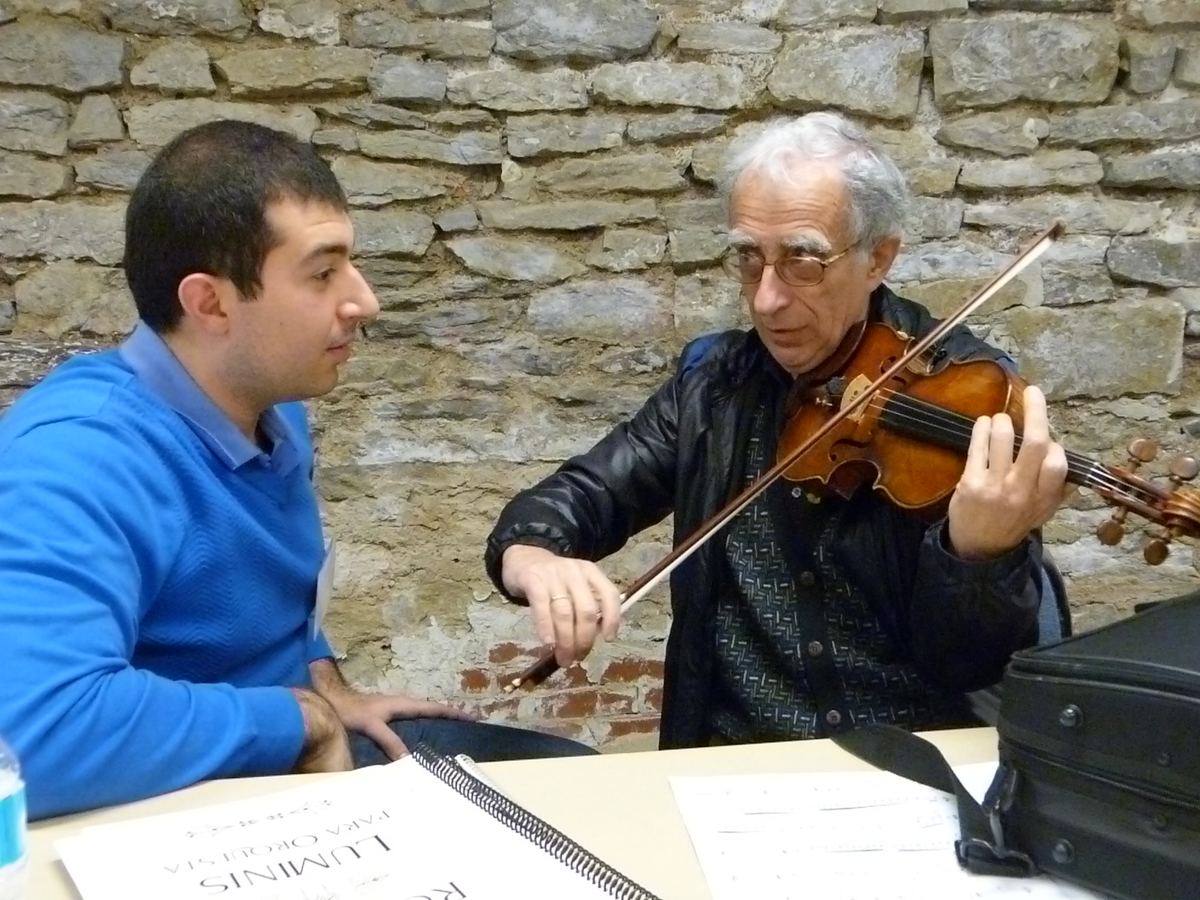
I was in a program only for high school students called the LA Phil Composer Fellowship Program. I was part of the first cohort of composer students, which was really cool.
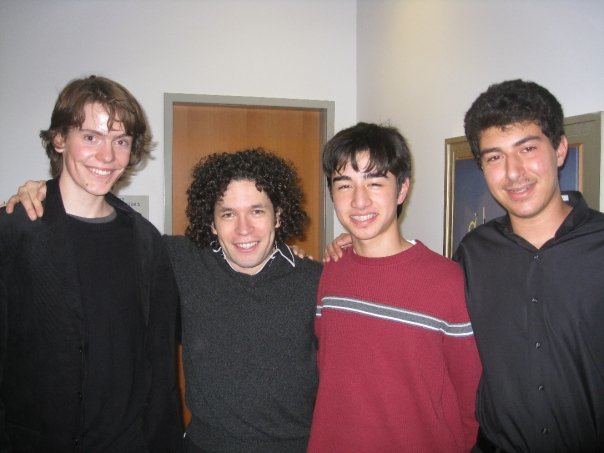
Obviously, not everybody's going to have this sort of opportunity while they're in high school. I was just at the right place at the right time.
Not having a piece like this also doesn't preclude you from applying to a composition degree. None of these folks are expecting you to have an orchestral piece. But since I had one, of course I was going to submit it for this undergraduate application.
Right from the first page, I'm showing signs that I'm able to orchestrate
It starts out with this horn melody, and you can already see I have the strings divided into divisi, with the harp punctuating some things with the percussion.
So right from the first page, I'm showing signs that I'm able to orchestrate, even if it's a really simple orchestration like this.
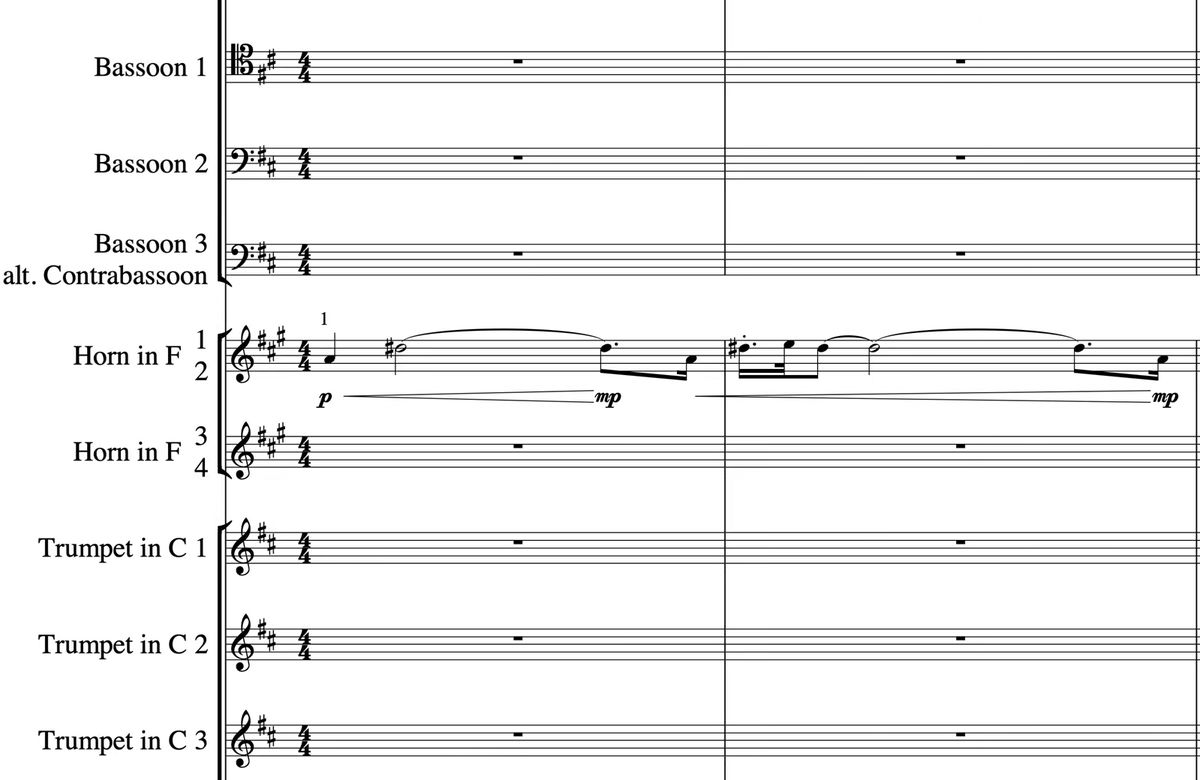
Then you hear the different melodies overlapping on top of each other, between the violin and the solo woodwinds.
This might be a little bit complicated, especially for a first orchestral piece. But in a way, it's kind of a copycat of Debussy, Ravel, that kind of thing. It's nothing entirely original that I'm doing here.
At least it's showing signs to the admissions officer that you've read some orchestration books, you've experimented with how strings sound together, and you've looked at things like dovetailing, a very important orchestrational tool.
Some level of chops
Doing these from the first few pages of the orchestral score is extremely important. It shows whoever's looking at your piece that you have some level of chops. Not a lot, but some level, at least to get you into an undergraduate program.
As I said, not everyone's going to have a chance to record an orchestral work for college, but that's totally okay. The idea is that when you get to college, you'll be able to work with the student orchestra there.
Your portfolio should have these 3 things
The important thing I hope you get out of my portfolio is that yours should have these 3 things.
Number 1, it needs to be notated legibly, hopefully through a notation program like Sibelius or Dorico.
Number 2, it needs to be contrasting. You need to have contrasting pieces. You don't need to have an orchestral piece, but hopefully one piece has instruments, maybe another piece has vocals, maybe another piece has solo piano. It needs to be different.
- One piece has instruments
- Another piece has vocals
- Another piece has solo piano
It needs to be different
- First pieceAlto flute, bass clarinet, B-flat clarinet, violin, cello and piano
- Next pieceChorus
- Third and final pieceMy orchestral work
Quite a contrast
Number 3, hopefully you'll have some kind of access to conservatory-trained musicians that can actually record your music to a high level. That way you'll be able to stand out from everybody else that's probably sending in MIDI recordings.
Now, get writing.
What to do next
Number 1 on that list is a portfolio that's notated legibly, so start with my free engraving checklist.