
There's no one best music school for composition
After 12 years of music composition at the collegiate level, I have some opinions about where one can go to school, especially as an undergraduate. There's no one school that's the end-all be-all. But if I can offer any words of wisdom on the best school of composition for you, it would be these 2 things, plus a few things I like about particular schools.
 By Saad Haddad, composer
Here's the video this post comes from (17 minutes), or you can read it below.
- Attend the school that offers you the most scholarship
- Go to a college within about 1 hour of a major metropolitan center
- A conservatory setting within a wider campus
- Musicians that are going to be happy to play your music
- A really good mix of faculty
My 12 years of schooling were split between the University of Southern California, where I did my bachelor's, the Juilliard School, where I did my master's, and Columbia University, where I did my doctorate.
- Bachelor'sUniversity of Southern California
- Master'sThe Juilliard School
- DoctorateColumbia University
1. Attend the school that offers you the most scholarship
I mean scholarship in terms of grants. Reject any loan-based aid that they might offer you that you'll have to pay back for years and years and years after you graduate.
Attend the school that offers you the most scholarship in terms of grants and reject any loan-based aid.
The dream school I didn't go to
Let me tell you a story. Back when I was 17, I was accepted to my dream school, and that was an exchange program between Columbia University and the Juilliard School. You'd go to Columbia on a 4-year degree studying whatever you want, and at the same time you'd be taking lessons with a composition teacher at Juilliard.
It was a dream scenario for me, because at that time I was really into all kinds of subjects, not just music. At the same time, I had the very good fortune to be accepted to USC on a full tuition scholarship.
Now guess which one of those 2 I wanted to go to. As someone that grew up in California, I wanted to go to New York and live the New York City lifestyle, go to Columbia, an Ivy League, go to Juilliard, the top conservatory in the entire world, and experience what that life might lead to.
Hundreds of thousands of dollars of debt
I could basically pursue whatever I wanted
Spoiler alert: I didn't end up going to Columbia and Juilliard for my undergrad. If I did, I would have had hundreds of thousands of dollars of debt to pay back after graduating, and I might possibly not have been able to go on to do my master's and doctorate after that.
At USC I didn't have to worry about any of that. I knew that after I graduated with the 4 years, I wouldn't be in any debt.
Without the support of my parents and the late Steve Stucky, who helped steer me to go to USC, I'm not sure what I would have done. But I'm really glad that I ended up going to USC.
Private institutions and in-state tuition
A private institution doesn't offer any kind of in-state tuition. A public university offers it to undergraduate students that already live in that particular state, at a reduced cost. The University of Michigan at Ann Arbor is a public university. Rice, USC and Juilliard are private.
So with a private institution, you're going to pay private institution prices, unless you get some kind of merit-based scholarship or need-based financial aid.
- 1Private or public?A public university offers in-state tuition if you already live in that state.
- 2Merit-based or need-based?At a private institution, without one of these, you pay private institution prices.
- ?Is it a grant or a loan?Reject any loan-based aid that you'll have to pay back.
- 3Attend the schoolThe one that offers you the most scholarship in terms of grants.
2. Go to a college within about 1 hour of a major metropolitan center
The next thing to consider, especially if you have very little connection to the field of music, is to go to a college that is within about 1 hour driving distance from a major metropolitan center.
That way you can make it a point to attend concerts and be exposed to the thriving classical music scenes that they have in those areas.
Ann Arbor, where the University of Michigan is, is a very, very small town in relation to the major metropolitan areas below, but it's about 45 minutes driving distance from Detroit. And the cultural imprint that Ann Arbor has is extremely strong in the state of Michigan, especially in regards to their art scene and their film scene.
In a big city, you're of course going to be surrounded by many cultural institutions, not just classical music ones. Juilliard is located in the heart of Manhattan, right by Lincoln Center, and just a few blocks away you have Broadway and all that excitement that goes along with it.
3. A conservatory setting within a wider campus
As an undergrad at a place like Rice, you're going to be surrounded by not just your fellow music students at the Shepherd School of Music but also the wider campus community, with all other kinds of majors. Not to mention participating in sporting events, as well as just being friends with people outside of the music orbit.
I find this to be a really important facet. As a music major, I feel like it's just a little bit short-sighted to just focus on music for that entire 4 years.
I really liked my time at USC being surrounded by many other kinds of people and learning from them, as well as being a little bit more rounded. I was part of a fraternity. I was even part of the marching band for a semester. I pretty much got as much as one possibly could out of that institution, and I absolutely loved it.
Juilliard is a self-contained conservatory that only offers music, dance and drama. At Juilliard and places like it, you won't be getting that well-rounded undergraduate experience like you'd be getting at Rice, the University of Michigan and USC. The Peabody Institute is also one small part of a larger university, Johns Hopkins.
Some of the most world-class musicians you're ever going to meet
A more well-rounded education
4. Musicians that are going to be happy to play your music
At Rice, the University of Michigan and USC, you're going to be surrounded by conservatory-level musicians that are going to be happy to play your music, as long as you're very nice to them.
At USC, you're also going to have the opportunity to work with the wind ensemble or the orchestra, if you're into writing large-scale pieces. At Juilliard there are chamber contests where you can have your music performed, and there's a new music ensemble.
Not to mention the opportunity to work with dancers at Juilliard, who are not just really great at dancing itself, but also really talented choreographers. They really enjoy the process of not just having new choreography, but also having new music that goes along with it.
One of the things I like about Curtis is their very strong relationship with their alumni. Oftentimes the school would bring them back to have their music played, as well as commission them to write for the new crop of students.
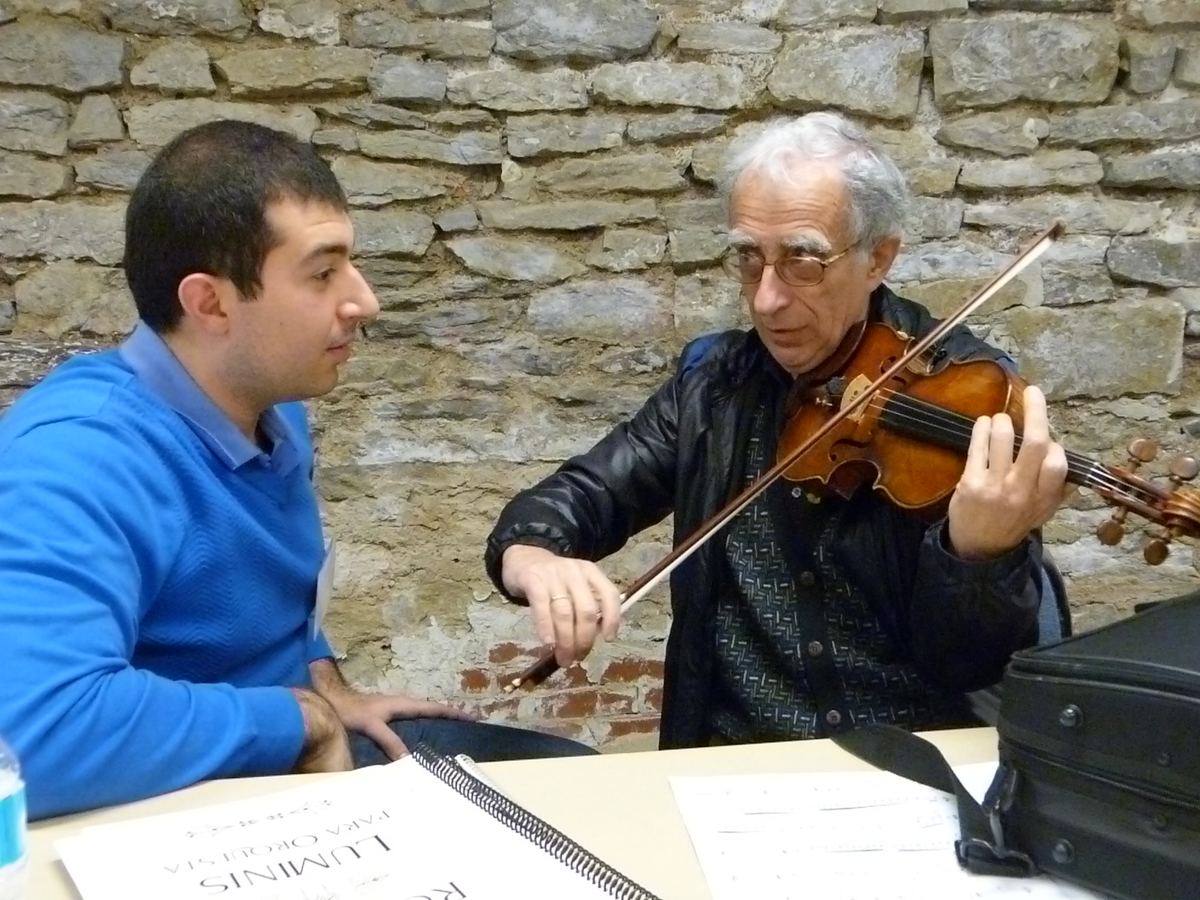
If you want to try out film scoring
I'm very biased when it comes to USC, but if you're someone that wants to try out film scoring, right next to USC's Thornton School of Music is the world-famous School of Cinematic Arts.
As an undergrad, I was really interested in pursuing film scoring, to such an extent that I would try to meet as many film students as possible so I could work on their student films. What was really exciting was how fast-paced it was.
- 1Get the filmAnd then spot it with the director.
- 2Figure out the ensembleThe one I wanted to hire.
- 3Write the whole scoreOver a week.
- 4Record all the musiciansThe very next week, at the John Williams Scoring Stage.
- 5See the fruits of my laborAbout a month after that, up with the film in the huge theater at USC.
Film music is not something I ended up pursuing as a career. But I remember at that time it was important for me to at least have that experience, so that I could figure out all the different ways that one could make a living as a composer.
5. A really good mix of faculty
I like a faculty with people that you can really look up to. I also like a really good mix of faculty that have experience with different mediums: the orchestra, the wind ensemble, voice and chamber ensembles.
When a faculty all together encompasses a rich and diverse array of aesthetics, styles and personalities, I'd find it very difficult for you not to get along with any one of them throughout your 4 years.
- Aesthetics
- Styles
- Personalities
- Orchestra
- Wind ensemble
- Voice
- Chamber ensembles
What to do next
Wherever you end up, start with my free 5-step guide to writing music that gets performed. And if you're applying now, here's how to prepare your composition portfolio.