
You're going to be nervous at your composition audition
Depending on which colleges you've applied to, you might need to audition either in person or on Zoom. Trust me, you're going to be nervous, and in my opinion nothing is more important than making a lasting impression on the composition faculty. Here's what to expect, and my 7 tips to help you with the interview.
 By Saad Haddad, composer
Here's the video this post comes from (9 minutes), or you can read it below.
- Actually do your homework
- Bring any new music that you've written
- Make eye contact and never look down
- Make it a back and forth, almost like it's a lesson
- Be prepared to answer some no-brainer type questions
- Prepare as many questions as you possibly can
- What to wear
What to expect at a music composition audition
The audition comes after you've passed the initial pre-screening round of your application. Let's say you pass it. The school is going to send you an email telling you what to expect when you go in.
You should be expecting to meet with one, if not all, of the composition faculty, one by one. There may also be a component where you're required to take either a music theory or ear training exam, or some combination of the 2. This all depends on that email you get.
- 1Pass the pre-screeningThe initial round of your application.
- 2Get an email from the schoolTelling you what to expect when you go in for your audition.
- 3Meet with the composition facultyOne, if not all of them, one by one.
- ?Is there an exam?Music theory, ear training, or some combination of the 2. This all depends on that email.
In my opinion, nothing is more important than making a lasting impression on the composition faculty. These are the folks that you're going to be spending a lot of time with. And conversely, they want to make sure that they're taking students that they actually want to teach as well.
So I'm going to focus solely on my 7 tips to help you with the interview.
Nothing is more important than making a lasting impression on the composition faculty.
1. Actually do your homework
What I mean by this is that you've actually read their bios, you've studied their music, studied their scores, maybe watched an interview of them, just to get to know each of these composers.
So in the back of your mind, you can have a sense of, "Oh, which one of these composers would I like to study with, and why?"
2. Bring any new music that you've written
The next tip involves your actual, physical materials. It's especially important that the scores you bring with you to the interview are professionally bound and that the paper is at a nice thickness.
Most importantly out of all of this, bring any new music that you've written between the time that you applied to the school and the time that you have the audition. Sometimes this is a 2 to 3 or even 4 month period. Perhaps you've written a new piece, or perhaps you've gotten a new recording. Bring that with you.
They want to see that you've made some kind of progress in those 3 to 4 months. It's not just the pieces that you wrote for the application and that's it.
I remember I showed some pieces that were definitely written or recorded between the time I applied and the actual audition. It was really good of me to bring them, because I think it helped me actually get into the school.
How many scores to bring
Maybe for you it would be good to bring some pieces that didn't actually make the cut for your college portfolio, but would help you round out your entire application. You never know what's going to come up during these interviews, so it's best to be prepared with as many professional scores as you can have.
Maybe I wouldn't go past 5, 6, 7 scores, but bring at least a healthy amount of music that you can refer to anytime during the interview.
The worst thing that could happen is that you're sitting there thinking, "Oh man, this would have been a really good opportunity for me to bring up that piece," but you don't have that piece with you.
If you feel like you don't want to bring more pieces than what you have in the portfolio, because those are the pieces that you want to show, then fine, do that. But if you have other pieces, do bring them with you to the interview.
3. Make eye contact and never look down
Number 3 is body language. When you're meeting your professor, make eye contact. Never look down. You want to appear confident even though you're really nervous inside.
Trust me, you're going to be nervous. But treat this professor like a human being. They want to be treated like a human being just as much as you do.
Making eye contact will actually help defuse that initial tension that you're going to have when you first walk into that room.
4. Make it a back and forth, almost like it's a lesson
Number 4 is actually what you're going to say when you're in that interview situation. When you're nervous, there are 2 things that can happen. Either you're really nervous and you just shut down and don't want to say much, or conversely, all you want to do is talk and not let the other person talk.
You might get so nervous that you just end up yapping and yapping and yapping, and going and going and going on about what you like and your interests and your accomplishments.
Make it a healthy amount of time, not too long, not too short, and wait for the other person to answer you. This way, the professor feels like they're having a back and forth with you, almost like it's a lesson. When you're in a lesson, you don't want one person to be talking the entire time.
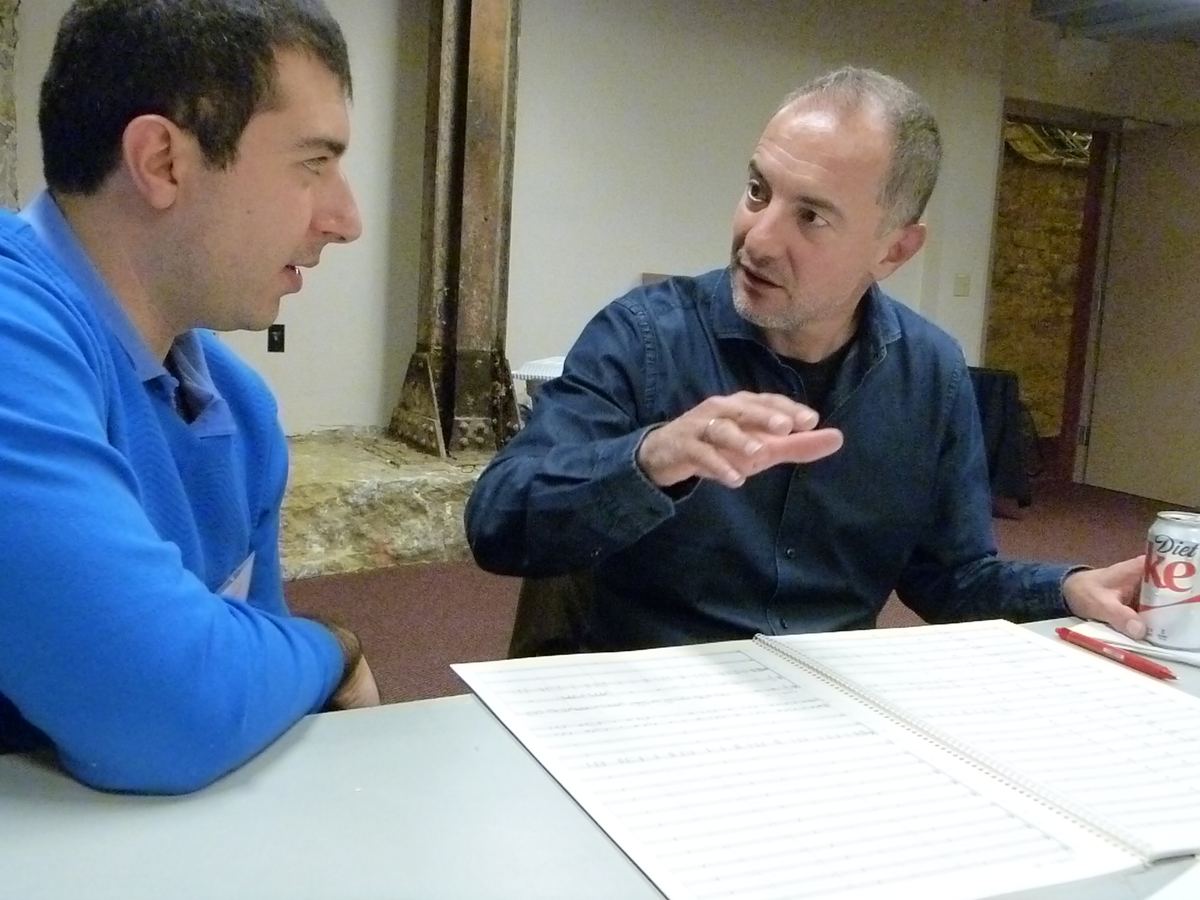
Practice with a friend
So practice with one of your friends when you're doing this interview prep, and think to yourself, "Okay, did I talk long enough, or should I talk a little bit more?" See if, when you get nervous, you're one to talk too much or one to talk too little. This is an extremely important point.
5. Be prepared to answer some no-brainer type questions
Why do you want to be a composer? Why did you apply to this school? Who are your favorite composers, and why?
You want to make sure that you have, not word-for-word answers ready to go, but a good sense of, "Okay, if someone is going to ask me this question, what am I generally going to say?"
- Why do you want to be a composer?
- Why did you apply to this school?
- Who are your favorite composers, and why?
- A good sense of what you're generally going to say
Not word-for-word answers
6. Prepare as many questions as you possibly can
Why is this important? There's the obvious part of curiosity, that you actually want to know what's going on at this school.
The second part of this is that you're showing that you have interest in the program. Otherwise, how do the professors know that you actually want to go to that particular school? It's really by the questions that you ask.
At the very end of the interview, what they're going to do is ask you, "Hey, do you have any questions for me?" At that point, you need to make sure that you ask a question that you haven't already asked.
- 1Write them downBefore you go in for your interview.
- 2Show that you have interestIt's really by the questions that you ask.
- ?"Do you have any questions for me?"At the very end of the interview.
- 3Ask a questionOne that you haven't already asked by that point.
That way they'll see, "Wow, this person actually did their homework, actually came prepared with questions." And hey, if you're kind of on thin ice as far as getting in, maybe that would help push you over the edge.
So it's really important to have these questions in mind, and even write them down before you go in.
7. What to wear
This is something that we composers never really think about at all. The composers interviewing you are going to run the gamut in what they're wearing themselves, so I wouldn't worry too much about them. What you need to worry about is what you're going to wear.
I wouldn't advise that you show up in a tuxedo, and at the same time, I wouldn't show up with flip-flops. I would show up maybe a little bit nicer than you would show up to a normal day of school. That's probably my rule of thumb.
Making the professor feel uncomfortable
A little bit nicer than a normal day of school
Making the professor feel uncomfortable
Of course, everybody has their own style, especially when you get into the music world. You want to feel comfortable, but not to the point where you're making the professor feel uncomfortable by overdressing or underdressing. So use common sense for this.
A bonus tip: meet with a current student
If you've stuck around this long, I feel like you deserve a bonus tip. Try to set up a meeting with a current student at the school where you're interviewing.
Preferably this person is at least a junior or a senior in the program, so you can get a good idea of how they felt about their time in that composition department.
What to do next
Before you bring your scores with you to the interview, get my free engraving checklist. And if you have more than one school in mind, here's how to choose a music school for composition.