
Was going to Juilliard for composition worth it?
Looking back on my time at Juilliard as a composition major, I barely remember a single specific thing they taught me in my music classes and lessons. So was it worth it? The answer is yes, but probably not for the reasons you're thinking right now.
 By Saad Haddad, composer
Here's the video this post comes from (5 minutes), or you can read it below.
- The teaching, the opportunities and the access are real
- The cost is real, and it made me ruthless
- What I actually remember from Juilliard, 10 years on
- You don't need Juilliard to build it
The teaching, the opportunities and the access are real
When most composers think about Juilliard, they think about the faculty, the classes, and the prestige of having your music read by players who could walk straight into a professional orchestra job tomorrow.
All of that was very, very real. When I was there, we had orchestral reading sessions multiple times a year, and one of them was even played publicly in a live concert.
There were competitions for the composers to have their work featured at Alice Tully Hall. There were chamber music showcases.
How to be free with my music
I studied one-on-one with the Pulitzer Prize winning composer John Corigliano, who did something I didn't expect. He taught me how to be free with my music. He taught me how to organize my ideas without strangling them.
He taught me how to organize my ideas without strangling them.
I remember finishing my first piece that semester with him, and watching him light up in a way that I'd never seen him do during our lessons before. That moment meant everything to me.
So yes, the teaching is real, the opportunities are real, the access is real. But none of that is the reason I tell you it was worth it. And that surprised me too, because I assumed it would be.
The cost is real, and it made me ruthless
Juilliard costs around $50,000 a year in tuition alone, and that's before you factor in living in New York City.
When I was there, I thought about the cost constantly. And not in a panicked way, but in a very specific way. I would actually sit there and calculate how much I was spending per class.
What that arithmetic did to me
What that arithmetic did to me was make me ruthless. No parties, no drifting. Every day was either composing or collaborating with other musicians, because the cost of wasting a day was too visible for me to ignore.
The cost was too visible for me to ignore
2 years of total focus
It was 2 years of total focus, and the price tag is a big part of why.
You can't quietly let yourself off the hook
I'm not saying you need to spend $50,000 to get focused. But what the cost did was remove the option of being just halfway in.
When the stakes are that visible, you can't quietly let yourself off the hook. You either show up completely or the number haunts you.
- 1I thought about it constantlyIn a very specific way.
- 2I would sit there and calculateHow much I was spending per class.
- ?Halfway in?What the cost did was remove that option.
- 3Show up completelyOr the number haunts you.
For me, that forcing function was one of the most clarifying experiences of my entire career. The cost is real and it's high, but what it forced was something I couldn't have manufactured just on my own.
What I actually remember from Juilliard, 10 years on
Here's what I actually remember from Juilliard 10 years on. Not the specific things I was taught in composition lessons, not the seminars, not the music history or ear training classes. What I really remember is the energy.
Everyone around me, violinists, harpists, dancers, drama students, was completely all in on a niche art form that the outside world thinks is dying.
- The specific things I was taught in composition lessons
- The seminars
- Music history
- Ear training classes
- Violinists
- Harpists
- Dancers
- Drama students
Completely all in
That shared pursuit unified us in a way I didn't expect and couldn't have predicted, because composing is isolating by nature. It's you and the desk and the paper and the computer. That's the default.
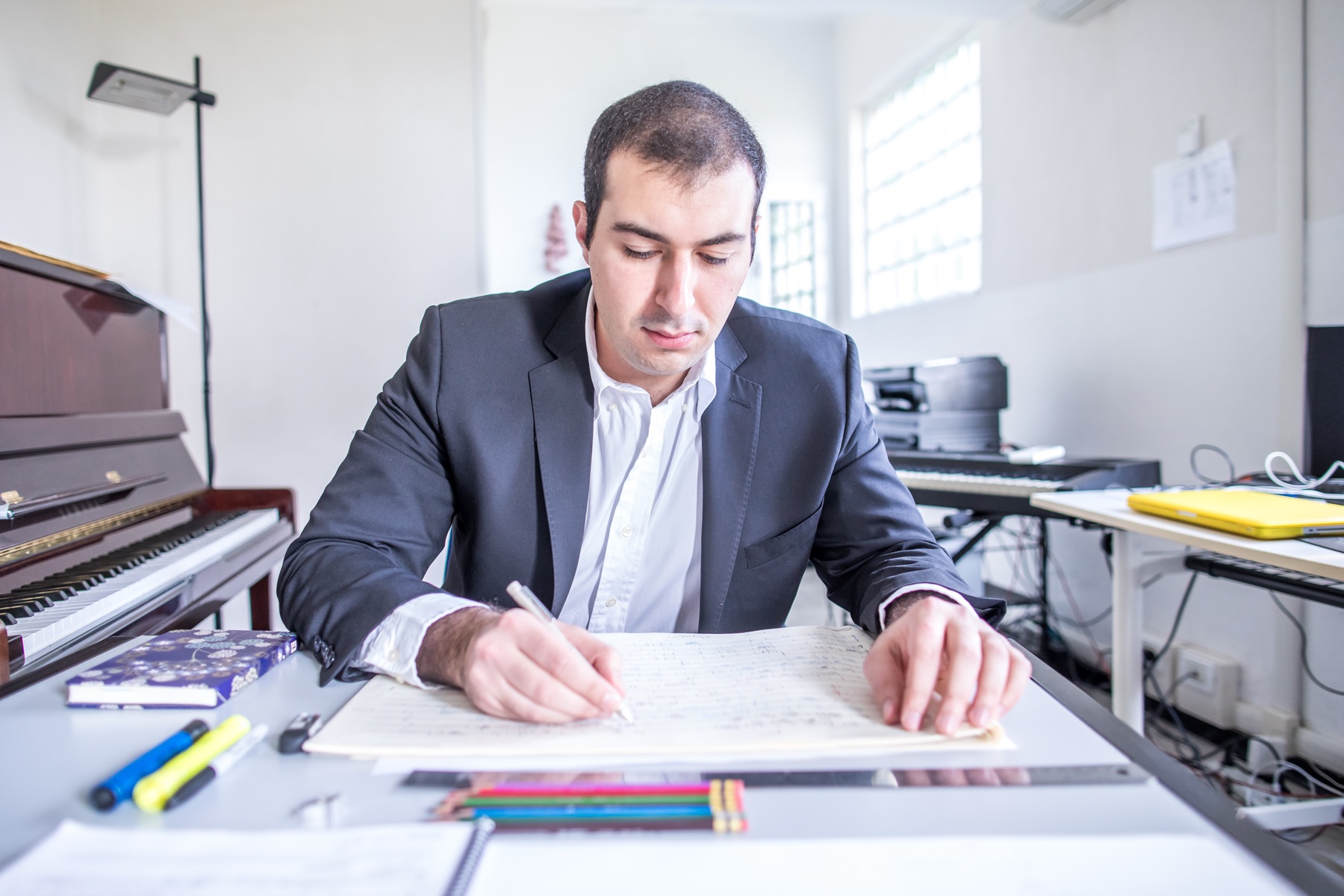
At Juilliard, the default was flipped
At Juilliard, everyone around you was walking the same path, fully committed. And that energy sustained me across 2 full years.
Here's the proof that it was real
One of the commissions I finished was a piece for violin and piano for the violinist William Shaub, who's the concertmaster of the Knoxville Symphony. I met Will during orientation at Juilliard, and without that community, that commission just never would have existed.
The teaching fades but the community compounds.
And that's what made it worth it.
You don't need Juilliard to build it
So was Juilliard worth it? Yes, but not for the reasons I thought going in. The faculty, the classes, the reading sessions, my teacher, all of it was real, and all of it of course mattered.
But 10 years later, what I actually carry with me is the energy of being surrounded by people who are completely all in on the same thing. That's what that tuition bought me.
That community, that sustained energy, that sense of walking the same path as people who just get it: you don't need Juilliard to build it. But you do need to build it deliberately, because isolation is the default for composers, and no amount of craft development fixes that on its own.
The question worth asking
If your music is living on a hard drive right now instead of a stage, the question worth asking isn't whether you went to the right school. It's whether you've built the right community around you.
All of it was real
Available to every composer
That's the real work, and it's available to every composer, not just the ones that can afford $50,000 a year.
What that means for you
If you're a composer right now and your music is sitting on a hard drive instead of on a stage, the thing standing between you and performances isn't your craft. It's that you're doing this alone.
I wanted to prove that this was fixable. So in 2024, I ran an experiment with a composer who had no voice, no performances and no commissions. 12 months later, his music was being performed internationally, and I documented the whole thing. It's the most direct answer I can give you to everything we just talked about.
What to do next
If your music is sitting on a hard drive instead of on a stage, start with my free 5-step guide to writing music that gets performed.