
Getting your music performed without cold emails
If your writing is solid but no one's reaching out to you, it's almost certainly not about the music. Here's the exact 3-step approach I'd use to find musicians to play your music and go from zero to real musicians performing your work, without sending a single email to strangers.
 By Saad Haddad, composer
Here's the video this post comes from (8 minutes), or you can read it below.
- Create a list of every musician you know
- Have an actual real conversation
- Look for the places where musicians gather in small groups
1. Create a list of every musician you know
If you're reading this, you're certainly not starting from scratch. This is something most composers I work with don't realize until they go through this first step.
One composer I work with wanted more performances of his music, but he lives in a medium-sized town, not a major music city. He didn't know how to get his music played without access to full-time concert and orchestral musicians.
I asked him to take a step back and think about every musician he knew, not just the ones who were full-time professional players. From there, he put together a list of players he knew between his current city and where he went to college, and reached out to 10 of those people about writing a new piece for them.
Every single one of those 10 players either commissioned him for a new piece or agreed to perform something new written for them.
Who goes on the list
If you want more performances of your own work, this is the first step. Create that list of every musician you know. It doesn't matter if these musicians are professionals or not, close friends or someone you've only talked to once after a concert.
You can never create a reason to trust you
They already have a reason to trust you
The reason this works is that people who've met you even just once already have a reason to trust you that you can never create by emailing a complete stranger.
2. Have an actual real conversation
Once you've put together this list of musicians you know, how do you actually talk to them in a way that makes a performance of your music happen? Actually talking to the musicians you want to work with is what most composers get wrong. And I know because I've done it wrong many times myself.
Probably the most painful personal memory of me doing it wrong came after my 2 years at Juilliard for a master's degree in composition. I'd been writing orchestral music and getting some of it played. I thought the next step was just to let every other orchestra in the world know that this was something they should play.
So I devised this plan to collect contact information from about 600 orchestras from around the world, and I emailed them. No commissions, no performances.
Here I am with a graduate degree from Juilliard. Here I am thinking that I had a voice that people wanted to hear. I had written the music. I had done the time. I felt like I was a failure.
Without this kind of networking
Whether you've been through a situation like this or not, what a lot of composers I meet assume they need to do instead is network with musicians. But for a lot of creative people, when you think networking, it makes you feel like you're trying to sell someone a used car.
You hate how transactional and icky it feels to talk to someone just to give yourself an excuse to ask them for something. But there is a way to get your music performed without this kind of networking. And without having to email 600 cold strangers on top of that.
For a lot of creative people, when you think networking, it makes you feel like you're trying to sell someone a used car.
What to do instead
All you actually need to do is really simple. Pick a musician from your list that you like. Schedule a time to talk with them in person, on Zoom or on a phone call. And have an actual real conversation.
What we're not going to be doing is asking this person for anything. The point is just to catch up and see what they're up to.
- 1Pick a musician from your listSomeone that you like.
- 2Schedule a time to talkIn person, on Zoom or on a phone call.
- 3Have an actual real conversationJust catch up and see what they're up to.
- ?Run out of things to say?Ask to learn more about whatever projects they're working on right now.
Conversations flow best when people are talking about things they know a lot about, and everybody knows a lot about what they're personally up to.
Letting the performances happen organically
Some of the time, these chats will just be a good conversation and nothing more. But other times, you and the musician will get talking about music. They'll agree to play an existing piece of yours, or say they're interested in playing something new of yours, or even commissioning you.
That's what separates this strategy from networking and cold emails. We're prioritizing the relationship with the people we talk to and letting the performances we want happen organically as a result.
3. Look for the places where musicians gather in small groups
Because we're letting performances happen naturally when the musician is interested, we can't put all our eggs in one basket and just hope that the pianist we're talking to next week is up for playing a new piece. If we want consistent performances of our music, we're going to need to talk to a lot of performers.
Most composers assume that the place to meet performers is at big concerts where lots of musicians are playing and attending. But at a big concert in a big venue, like when the LA Phil plays in Walt Disney Concert Hall, the focus is on the performance and largely nothing else.
The musicians aren't hanging around after the concert and speaking to the hundreds or thousands of people in the audience. They've been on stage for 2 hours and rehearsed all week, so they're so tired and they just want to go home right away to their families most of the time.
What I found is the best place to meet musicians is actually the complete opposite of those big orchestral concert halls.
They just want to go home right away
The places where trust gets built
How Max met a cellist
Take it from my student, Max. He had a concert featuring 3 of his pieces in Brooklyn. The player he wrote one of those pieces for, a solo cello piece, was someone he met when he happened to be sitting right next to her at a very informal afternoon workshop by a local ensemble.
There were only about a dozen people at the workshop. As Max and this cellist chatted, they realized they were from the same hometown and had actually a lot of similar interests.
- A workshoponly about a dozen people
- They chattedsame hometown, a lot of similar interests
- A solo cello piecehe wrote it for her
- A concert3 of his pieces in Brooklyn
This type of conversation only has a chance to happen in a smaller and more informal setting. So whether you live in a big city or a small town, look for the places where musicians are gathering in small groups to share passion projects or rehearse music.
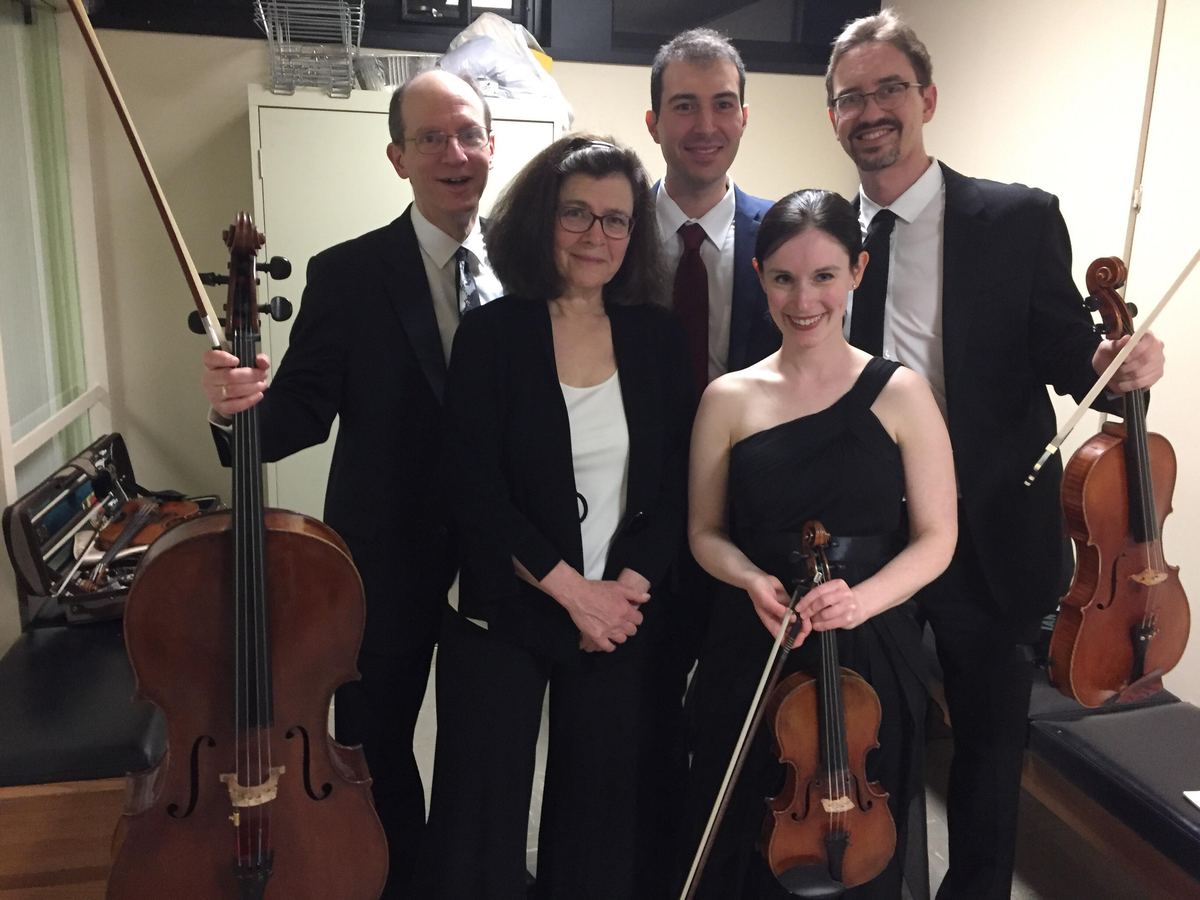
These are the places where trust gets built and trust is what leads to working together in the future.
This process is a lot like farming
If you did every step I've outlined here for the next 10 days or 2 months, you'll probably get some performances, but pretty soon those opportunities will dry up. That's because this process is a lot like farming.
We want the eventual outcome of our music getting performed, and we want it to happen consistently. So we have to plant seeds, but we aren't going to know exactly when those seeds will sprout. It's a long-term practice.
What it can look like when the results start to come in
My student Simon met a bassoonist named Rick at a festival. Simon wrote 2 solo bassoon pieces for Rick, and Rick loved them so much that he planned multiple performances of them and recommended that his bassoonist friends play them.
Simon also started writing a new set of miniatures for him, for bassoon and string trio. And because Simon built up all this trust, the bassoon player, who also happens to be the conductor of a youth orchestra, actually decided to commission Simon for a brand new orchestral work.
If you apply this strategy consistently over time, you'll build to the point where performers start reaching out to you, asking to play your music. But often a poorly presented score will destroy that trust that you spent so much time building.
What to do next
If you want the exact approach I use when I talk to musicians, including what to say and how to follow up to make performances more likely, grab my free guide to getting commissioned in 30 days.