
What stops composers with day jobs from getting performed
If you write music around a demanding day job, you're a lot like my student Tom, who's a full-time airline pilot and a serious composer, but didn't have a path to go from finished piece to actual performance. I helped him land 5 times more performances, and I'll show you the exact 3 changes that made it happen.
 By Saad Haddad, composer
Here's the video this post comes from (10 minutes), or you can read it below.
1. The hermit composer
Every piece we set up a performance for in 2026 was something Tom wrote before we even started working together. His music has been ready to get performances for years. He just didn't have the strategies he needed to actually get them played.
His biggest problem when we started working together was a mindset that quietly destroyed opportunities to get his music played. Here's how he put it: "I guess I had a very false perception that becoming successful as a composer was just kind of locking yourself in your room, studying, and then eventually you magically create this awesome piece and it gets played."
- 1Locking yourself in your roomStudying.
- 2You magically create this awesome pieceEventually.
- ?How does it get played?The part that he didn't really put too much thought into.
- 3It gets played
The idea that he could be a hermit composer who just sent music out into the world that people played totally on their own had been a part of how Tom viewed composition since high school.
A full-length symphony with no parts
When he was just a teenager, he wrote a full-length symphony for a state composition competition and won first prize. The very next year, he won the same prize with yet another symphonic composition.
But when he asked his orchestra teacher if he thought the pieces could get performed, here's what he was told: "Dude, this is a full-length symphony. Have you thought about making the parts?" Tom hadn't even thought about that.
It wasn't just that Tom didn't have a performer lined up for his pieces. He didn't even have the materials they'd need for a performance.
2 completely separate skills
So before we did anything else together, I helped Tom realize that writing good music and getting it played are 2 completely separate skills. You need both if you want your music to actually reach people.
2. A list of every musician that he knew
At this point Tom knew he needed to actively work to get his music played, but he still didn't know what he actually needed to do to make that happen. In the past, he said, it was "I want to write this, I don't really know what's going to come of it, I don't know what the next performance is."
So the first thing I had him do was create a list of every musician that he knew. I call this the performer pathway system. The goal was for Tom to write down the name of every musician he'd ever played with, studied with or sat next to, ranked from highest to lowest by how well he actually knows them.
"That was kind of eye-opening," Tom said, "just realizing how many awesome musicians and friends I know."
Working up the courage to reconnect
Making this list is the easy part. The hard part for Tom was working up the courage to reconnect with musicians on his list and ask them about his music.
After he tried this a couple of times, though, he realized something really important: "If one of my friends from before reached out to me and asked if I wanted to hop on a call and catch up and talk music, I don't really see why I would ever say no to that."
With his confidence boosted, he reached out to musicians he knew well to set up performances of a viola and piano sonata and a double bass piece.
Concerts where he didn't know a single person
Then he decided he wanted to expand the circle of musicians he knew, and started going to concerts where he didn't know a single person there.
At an orchestral concert, he spotted someone in the violin section who looked eerily familiar. After a little bit, Tom realized this was a friend from his high school orchestra class. They talked after and quickly caught up.
- Spottedsomeone who looked eerily familiar
- Caught upTom asked what they were doing
- Asked backabout Tom's playing and composing
- Violin sonataworking on performing it together
Tom had even built up his confidence enough to go to places like a jazz club that he'd never been to before. There was a quartet playing there, and he went alone and just enjoyed the music for a while.
- 1He went there aloneJust kind of enjoyed the music for a while.
- 2They had a breakHe went out there and explained how he really enjoyed their music.
- ?"Hey, what do you do?"Naturally, the conversation flipped, and he gave them a bit of his story.
- 3The second setHe ended up getting to sit in and play a tune with them.
Tom didn't start landing performances by begging people to play his music.
He just showed up, talked with people about the music they were interested in, and had pieces available if they wanted more.
3. Scores up to professional standard
Even though Tom had just figured out how to get musicians committing to play his music, he still didn't have any experience preparing his scores to the standards professional musicians expect.
People had looked at his music before, and they'd tell him there's some issues with the score, this is bad, or it doesn't really look so professional. "I was always kind of like, I don't really know what exactly I need to be doing," he said.
A verdict doesn't tell you how to fix it
The type of feedback Tom had gotten is what I call a verdict. Somebody tells you what's wrong with your piece, but they don't actually tell you how to fix it. Unfortunately, this type of feedback is really common in the composition field.
Tom and I took a very different approach. I went through his scores myself, page by page, and handed him back an actual list of errors to fix.
They don't actually tell you how to fix it
Very clear what needed to be done
In Tom's words, "I could go through the score, check the box and change all these things, and it was very, very clear what needed to be done in order to achieve the outcome that we were going for."
He didn't just ask for the score
The outcome Tom is talking about is getting his orchestral piece performed, when the conductor of the Southern Illinois Music Festival asked if he could play it. Tom had never created parts before for a large ensemble.
When this conductor said yes, he didn't just ask for the score. He asked for bowed master parts for the 4 principal string players, with every part fully engraved, cues written in, and page turns a player can actually manage.
Tom and I worked together on this for about 6 weeks, and he sent the whole thing in ahead of the deadline.
At the rehearsals
Tom attended the festival to hear the premiere of his piece. This is where a lot of composers run into issues. A score that isn't properly engraved leads to slow, frustrating rehearsals with lots of questions from the musicians.
The more time you spend answering those questions, the less time the musicians actually have to rehearse the music and to properly prepare to perform it.
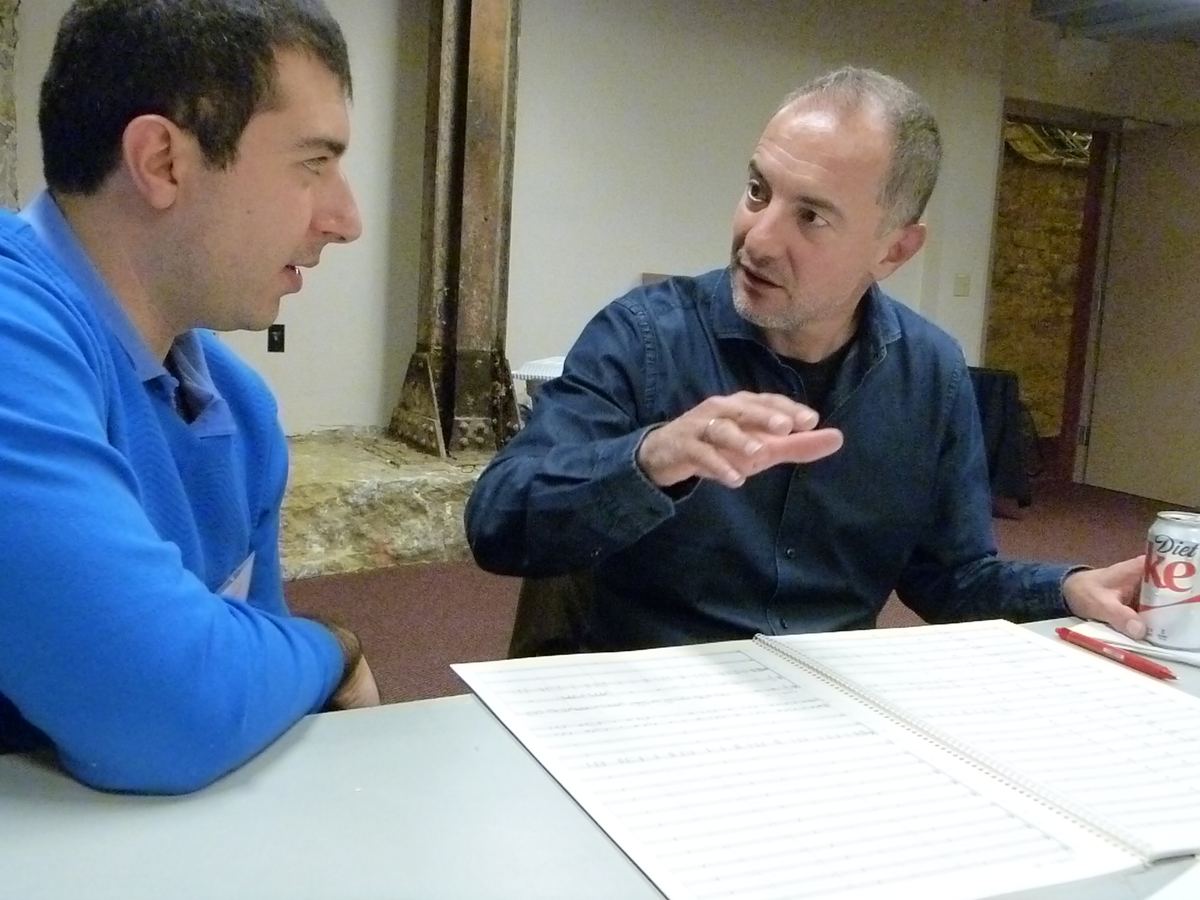
After working his score up to professional standard, here's what Tom found: "I heard the second rehearsal and I was happy with how it sounded. I thought it was coming together very nicely, and there weren't really any issues that any musicians brought up."
He was able to get a very polished performance and recording of the piece because of these changes that he made between the old and new version of the score.
What actually changed
A year after Tom and I started working together, he was still juggling the same demanding schedule. But Tom's 2026 started with 1 performance scheduled, and now it's wrapping up with at least 6.
What actually changed was actively pursuing getting pieces played, not clearing out his schedule or changing how he wrote music.
In fact, a lot of the work we've done together has been looking at a spreadsheet, revising drafts of follow-up emails, and cleaning up page turns and bowings. That's the reality of getting music performed.
It's why I asked Tom why he bothers with it at all, especially considering he has a career as a pilot already. "Music is my greatest passion in this life," he told me. "It's what I love the most."
If you're like Tom, and music is a part of who you are but you're still struggling to get your pieces heard, in all likelihood you already have everything you need. You're just missing the system to make everything you have work towards your greater goals.
What to do next
If you're ready to go from a list of musicians you know to real performances of your work, grab my free guide to getting commissioned in 30 days. These are the exact steps Tom followed to get his music performed.