
Why musicians don't reply when you email them your music
If you've ever emailed a musician about playing your music and heard absolutely nothing back, there's a good chance you made the same mistake I did. I sent 600 emails to orchestras and got zero performances from it. Here are the 3 mistakes behind that failure, and what I would do instead now that my music has been performed over 200 times.
 By Saad Haddad, composer
Here's the video this post comes from (8 minutes), or you can read it below.
1. The homework trap
In 2018, I cold emailed 600 orchestras, from community orchestras all the way to major American symphonies. I gave each one links to perusal scores and recordings for 7 orchestral pieces. And I asked them to listen to all 7, look at the scores and then tell me if they wanted to play any of them.
I never heard back from 480 of them. And out of the 120 that did reply, 60 said that their season was already set and they weren't considering any more music. The other 60 said they'd forward my message to their music director.
Only 1 of those 60 ever wrote me back, asked me for a rental quote, and then went silent after I sent it.
So, out of 600 orchestras, not a single one performed any of my pieces. At the time, it felt like a complete rejection of all my effort, like I'd wasted all those years studying composition.
I can't know for sure why so many people never replied, because they never told me. But when I look at what I sent, I was asking them to listen to 77 minutes of music, basically the full length of Beethoven's Ninth Symphony.
Even the orchestras interested enough to pass my message to their music director would have had to block out more than an hour just to answer a stranger.
The big mistake I made was asking musicians to do homework for me. Instead of asking for a quick response, I asked them to sit with my music and think deeply about it, which would be a lot to ask of a friend, let alone 600 strangers.
What I do instead
Now, when I reach out to people I don't know, I do something totally different. I ask 1 gut instinct question, something you can answer in 30 seconds or less.
Could we have a 20-minute Zoom call where I can hear about what you're planning for next season?
I sent this type of gut instinct email to a performer I'd never spoken to before. And when we got on a call, he ended up buying the sheet music for one of my pieces.
More than an hour just to answer a stranger
30 seconds or less
2. The prestige trap
The emails I sent were about 5 paragraphs long, and a lot of that length was me summarizing my resume. I talked about graduating from Juilliard, studying with Pulitzer Prize winner John Corigliano, working with major orchestras, and winning prestigious contests and awards, blah blah blah.
They made me sound impressive without actually getting musicians excited to play my music. A lot of composers make the same mistake, because we assume performers care about the same things we do.
But I actually already knew that approach didn't work. By 2018, I'd won about 70 composition contests and awards. When I was a kid dreaming about being a professional composer, I'd assumed that once you started winning national contests, ensembles would be knocking down your door to play your music or commission a new piece.
But more than half of those awards were cash prizes that didn't come with a performance at all. And the contests that did get me a performance mostly led to 1.
The connection he felt to what I had written
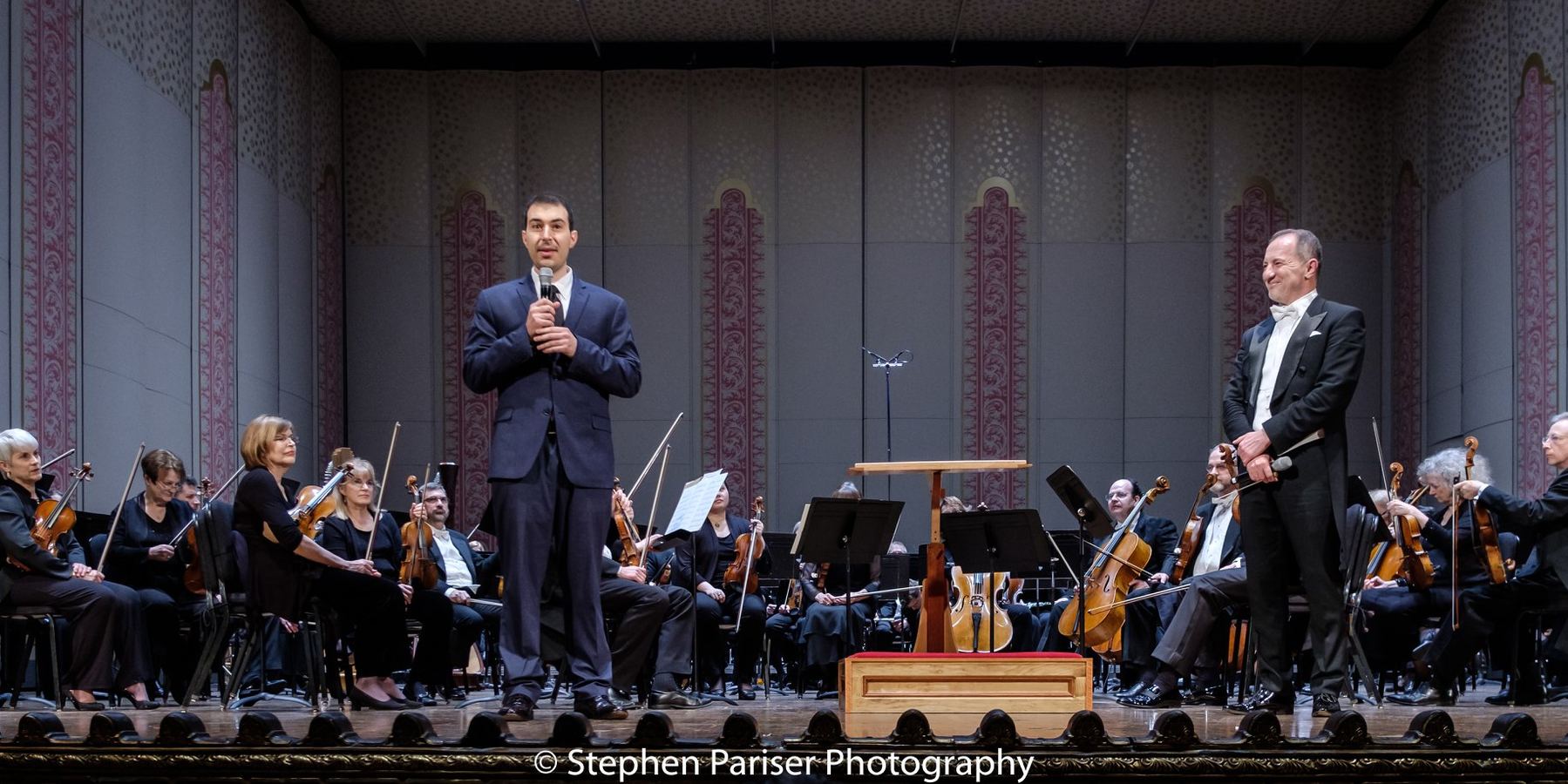
One of the only contests that led to more than 1 performance was an EarShot reading that got me in front of the Columbus Symphony conductor, Rossen Milanov. This contest got my piece Kaman Fantasy read by the Columbus Symphony.
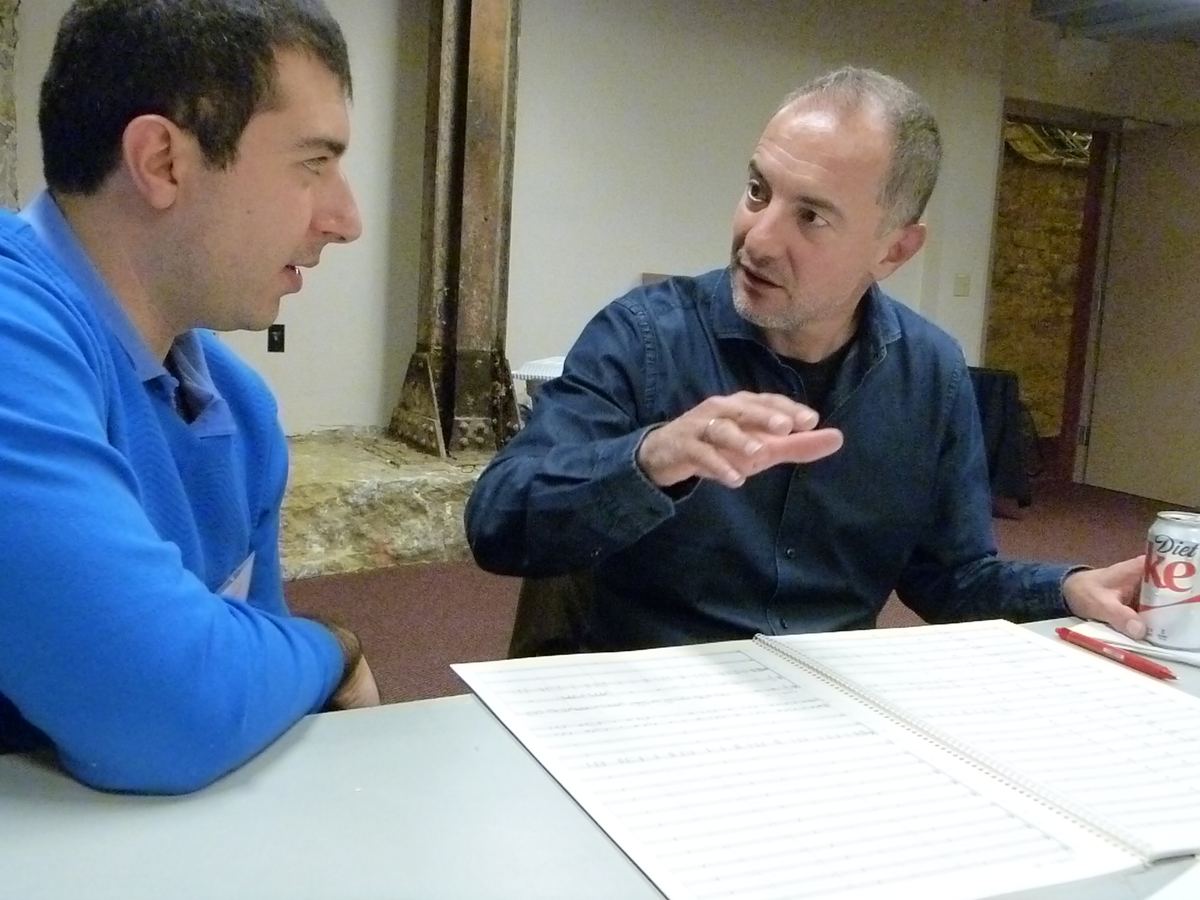
Backstage that same night, Milanov told me he really resonated with my music and asked to commission a brand new piece from me. He went on to perform my music 9 times and commissioned 2 new pieces. And that all started with the connection he felt to what I had written.
- 1An EarShot readingIt got me in front of the Columbus Symphony conductor.
- ?Does my music resonate with him?He told me backstage that same night.
- 2A brand new commissionHe commissioned 2 new pieces.
- 39 performancesHe went on to perform my music 9 times.
What I do instead
Performers don't care what prestigious awards I've won. They care what my music does.
For me, that's how my music explores the intersection of Arabic and Western music and identity, which is really 2 things put together: what my music sounds like, which is the Arabic and Western music combined, and what ideas it explores, Arabic and Western identity combined.
Sounding impressive
Ask to hear what they're interested in
So, if I were resending those emails today, I'd cut out the 7 linked pieces and the paragraphs of my accomplishments, and instead write a couple of sentences about what my music sounds like and what ideas it explores. Then I'd ask to speak to someone at the orchestra to hear what they're interested in.
3. Waiting for people to get back to me
After you stop asking musicians to do homework and can describe your music in a way that gets people excited, what happens when you still don't hear back? This is where I stalled out for years, because when you don't hear from musicians, it's easy to assume they're just not interested.
The problem with that assumption became clear after my piece Manarah premiered at Carnegie Hall in 2016. Getting a piece played there felt like finally making it as a composer. And I assumed that once Carnegie had selected me, they'd want to have me back.
At this point, it's been 10 years, and I've never heard from Carnegie Hall again. But what really stings is that even though Carnegie has never reached out, I never followed up with the people that I knew there either.
When you don't hear from musicians, it's easy to assume they're just not interested.
What checking in looks like
About the same time, I was visiting my hometown of Los Angeles and reached out to get a coffee with Chad Smith, who was the COO of the LA Phil at the time. I'd known Chad since I was a high school composer fellow with the LA Phil.
In July of 2016, we got coffee and he asked what I had been up to and what my dream piece would be. So I shared my idea, and it seemed like he thought the LA Phil would be interested.
But when nothing had happened 3 months later, I emailed to check in, and then I emailed again 3 months after that, and 3 months after that. I wasn't begging for a response, just sending a short message reminding them I existed and wanted to know what they thought.
I kept doing this for years, though by about email 10, I wanted to quit because I felt like I was banging my head against the wall. But I was too invested in getting a piece played by my hometown orchestra to give up just like that.
Then, in 2023, the LA Phil wrote back asking to commission my piece Aysheen. I don't know exactly why it took years of checking in for the LA Phil to get back to me, but I do know I kept the door open by checking in.
What I recommend to my students now
You might think reaching out constantly means people get annoyed and decide not to respond, which is why you should space your check-ins out enough that you aren't bothering them.
What I did with the LA Phil is slower than what I recommend to my students now. Have the first 2 follow-ups a week apart. Then space out to 2 weeks, 3 weeks, a month, 2 months, and so on.
Just make sure each follow-up is 1 simple question, so you aren't giving people homework or begging them for their time or attention. And even if it doesn't always work out, you'll be keeping way more possibilities alive than if you let things fade away because people don't get back to you.
What to do next
If you want help describing your music in a way that gets people excited, start with my free guide on how to write music that gets performed.