
How to get your first orchestral commission
I spent years sending out scores with no response until one breakthrough with the Columbus Symphony Orchestra jumpstarted my entire career. Here are the exact steps that took me from zero orchestral performances to over a dozen orchestral commissions in under 10 years, and the common mistakes that stop most composers from ever getting there.
 By Saad Haddad, composer
Here's the video this post comes from (9 minutes), or you can read it below.
- Avoid the Maelstrom trap
- Scale up what you already have
- Do the research before any arranging
- Arrange it for orchestra in a maximum of 6 weeks
- Turn that single reading into orchestral commissions
1. Avoid the Maelstrom trap
This is the single biggest mistake that kept me stuck for years. If you don't fix this, it'll be difficult to get any traction with professional orchestras.
During my undergraduate years, I spent 7 months writing a 7-minute orchestral piece called Maelstrom.
I was basically trying to build a mansion before I had the land, the crew, or even permission to build. I pored over Adler's orchestration textbook, inputted every single note I possibly could into Sibelius, and engraved over 30 separate parts, all without any real plan for getting this thing performed by an orchestra.
Sure, at that time I was able to get the school orchestra to eventually play it. But then what? If I kept going at that pace, half a year per orchestral piece, my career would take literally decades to materialize.
Plus, I still had zero experience working with professional orchestral librarians, concertmasters or conductors. And as we all know, you can't learn that stuff from just sitting in front of your notation software all day.
How to avoid it
I'd first start by writing for smaller ensembles: solos, duos, trios, quartets, where you can actually get your music performed and recorded, get some feedback, and get some experience working with working musicians in the field.
- 7 months for 7 minutes of music
- Over 30 separate parts
- No real plan for getting it performed
A career that takes decades
- Solos, duos, trios, quartets
- Performed, recorded, some feedback
- Experience with working musicians
Progress much, much faster
This way, you'll be able to build your skills and connections step by step, and you'll make progress much, much faster than if you try to launch your career with a dream orchestra that just doesn't exist right now.
If you want a simple way to figure out the kind of music you should be writing right now, I put together a free 5-step guide that walks you through the exact same process I use with my own private composition fellows on a daily basis.
2. Scale up what you already have
Once you have that foundation of solid chamber music, how do you actually make the jump to orchestral commissions? This is the exact strategy that worked for me.
I finished a 12-minute violin and piano piece that I'm still very fond of to this day. It was premiered by a duo of remarkable musicians during my time at the Juilliard School in New York.
Around that same time, my teacher, John Corigliano, had just arranged his own solo violin piece called Stomp for orchestra. After watching him go through that entire process, something clicked for me. I thought, what if I just do what he did and scale up what I already had?
It's like a chef who's perfected their little dinner party recipe and then gets asked to cater a big giant wedding. They wouldn't all of a sudden reinvent the dish. They'd just scale it up for 200 people or so.
- Perfected a little dinner party recipe
- Asked to cater a big giant wedding
- Scaled up for 200 people or so
- A 12-minute violin and piano piece
- A 6-week deadline
- Arranged it for orchestra
So I did the same thing. I took my violin and piano piece, gave myself a 6-week deadline, and arranged it for orchestra. Then I entered it into a few orchestral competitions I was keeping my eye on.
Fortunately, it won. And not just once. It won with programs run by the Milwaukee Symphony, Symphony in C and the Columbus Symphony Orchestra.
Of course, these results aren't extremely typical, sending in an orchestra piece and then having it win 3 times in a row. But I want to show you the road map I used so you can hopefully replicate these results.
- Pickone of your chamber pieces that's already been performed
- Researchorchestral competitions
- Checktheir past winners
- Arrangeit for orchestra in a maximum of 6 weeks
3. Do the research before any arranging
Pick one of your chamber pieces that's already been performed
First, you're going to pick one of your chamber pieces that's already been performed. Something preferably between 5 and 15 minutes, because that's going to have the highest chance of being performed as an orchestral work.
You don't want to go much longer than 15 minutes, because most professional composers out in the field aren't even getting commissioned for works longer than 15 minutes. So at the start, I wouldn't go beyond that 15-minute threshold.
Research orchestral competitions
Next, you're going to research orchestral competitions, ones like EarShot, the Minnesota Orchestra Composer Institute and the New Jersey Symphony's Cone Institute. There's a bunch of them that you can apply to.
My recommendation would be to apply to at least 3 of these competitions per piece that you arrange.
The reason we want to apply to multiple competitions at once is that we usually have no idea who the jury members are on any of these contests. We don't know what their stylistic biases are, and we don't know exactly who the other composers are in that pool.
So to maximize your chances of at least getting into that finalist pool of composers, you want to apply to at least 3 competitions, preferably more, with that one piece of music.
Check their past winners before you apply
Before you apply, check their past winners. This is going to give you a really good idea of the kind of stylistic tendencies that orchestras are going for right now, so you can have a better idea of which one of your chamber pieces to arrange for the orchestra.
Notice that we're doing all this research before we're doing any actual arranging.
4. Arrange it for orchestra in a maximum of 6 weeks
Map your orchestration by hand first
Now that we're in the arranging phase, the first thing you're going to do is print your chamber score. Grab some colored pencils and highlighters. That's what I do at least. And begin mapping your orchestration by hand first.
I like to map out each of the instrument families by color. I like to use red for strings, blue for winds, yellow for brass, and so on.
You can do whatever you want, of course, but I like to see a visual representation of the different orchestral families on that piece of paper when I'm initially beginning the orchestration process.
Give yourself a maximum of 6 weeks
This is the key thing. You want to give yourself a maximum of 6 weeks so you can really focus on getting the work done.
The whole point of this exercise is to learn how to arrange your music quickly for the orchestra, so that you can move on to other solo and chamber music and better your skills faster, rather than spending 7 months on an orchestra piece like I did back in the day.
And remember, you're not composing anything new here. You're reimagining existing material for the orchestra.
On a difficulty scale
To write a brand new orchestral work from scratch, from an absolute blank canvas, you're going to write the composition and you're going to orchestrate it. On a difficulty scale, that's like a 10 out of 10.
To write a solo, duo, trio, quartet, any kind of ensemble like that from zero, I'd say that's probably a 7 or 8 out of 10.
But what I'm suggesting here, starting from a solo, duo, trio or quartet piece that you're proud of and going all the way to an orchestral work, is going to be, let's say, a 4 or 5 out of 10. It's not going to be as difficult as writing a brand new work from scratch, either in chamber music or in the orchestration domain.
5. Turn that single reading into orchestral commissions
Now for the elephant in the room. Winning a competition is great and all, but then the real question is, how do you turn that single reading you'll get from a contest into brand new orchestral commissions?
In my own case, after my arrangement won with the Columbus Symphony, something unexpected happened. The conductor loved it so much that over the next 5 years, he performed 3 more of my pieces, 2 of which he specifically commissioned from me.
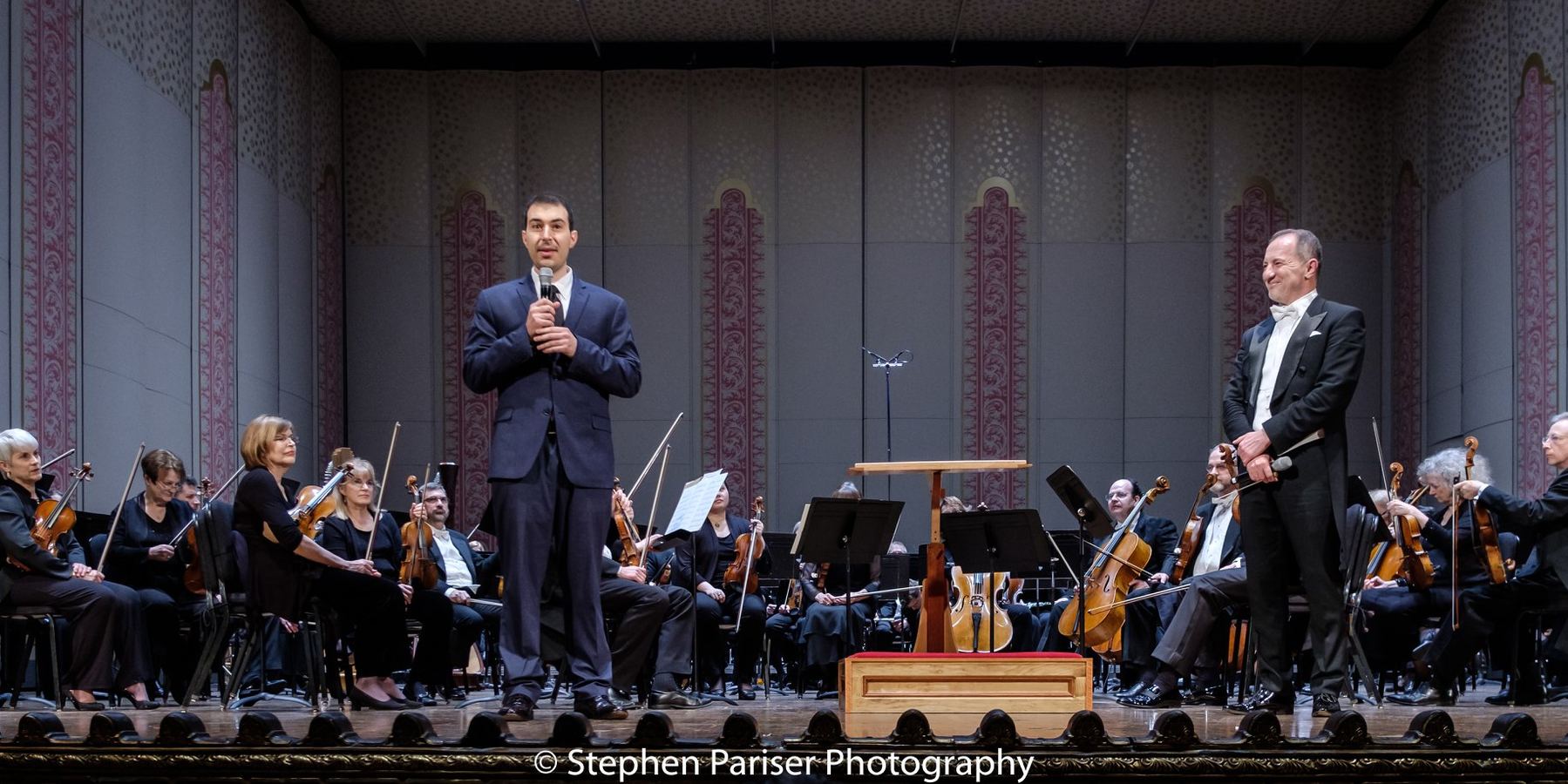
- Wonthe conductor loved it
- 5 yearshe performed 3 more of my pieces
- 2he specifically commissioned from me
Why did this happen? Because that initial piece aligned perfectly with what he valued in contemporary classical music. In other words, our aesthetics matched. Our musical tastes and values clicked.
That face time is everything
But what I learned really mattered was that winning that competition put me in the room. I was there for rehearsals, speaking with the conductor, working with the librarians, meeting the concertmaster. That face time is everything.
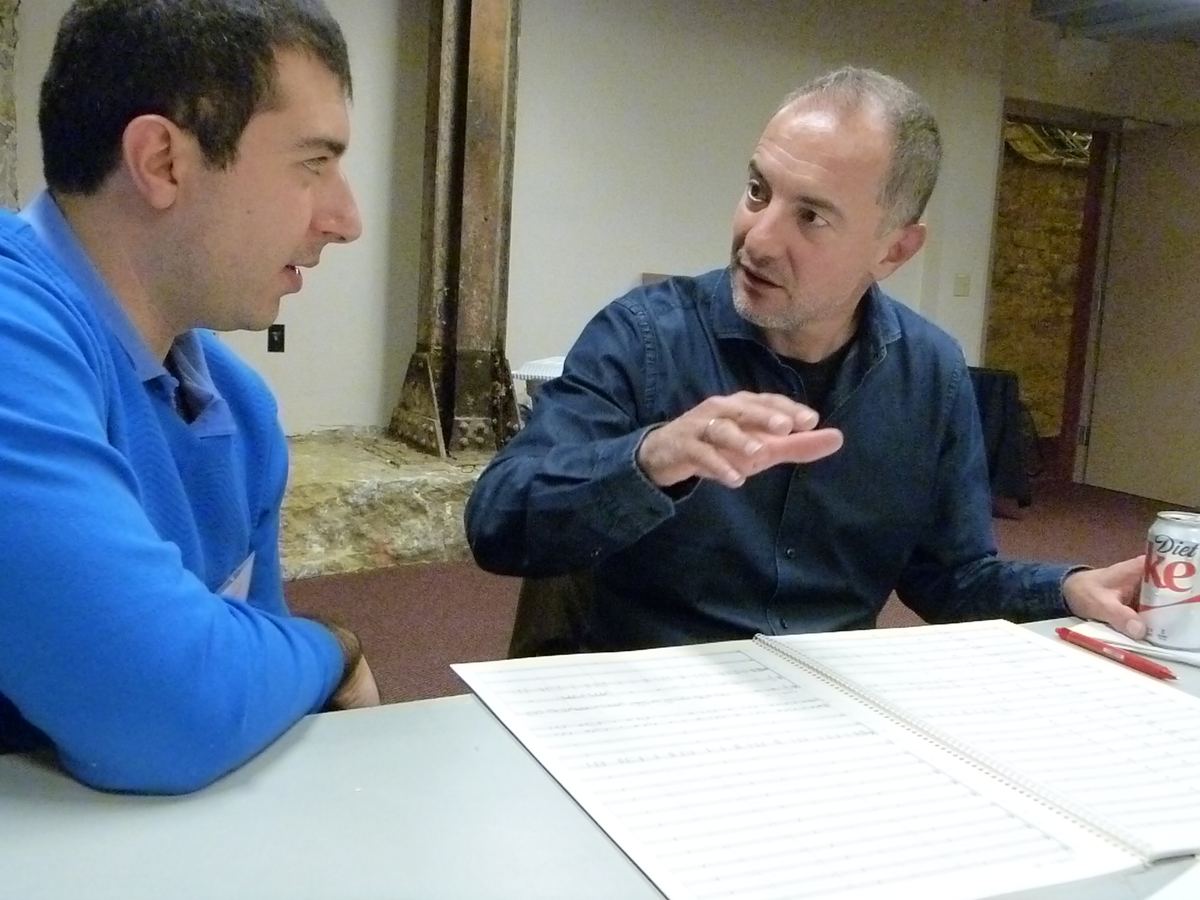
The way you handle yourself in rehearsals, how you communicate with the other musicians, whether your parts are extremely legible and delivered on time, all of this together builds trust. And enough of that trust inevitably leads to commissions.
Orchestral commissions don't happen because you blast hundreds of emails to conductors from all around the world that you've never met. I know this because in 2018, I did exactly that with about 600 orchestras.
Instead, commissions happen when someone inside the organization decides you're ready, because they've already seen you deliver in the past.
- You blast hundreds of emails
- To conductors from all around the world
- That you've never met
- Someone inside the organization
- Decides you're ready
- They've already seen you deliver
What you need to do
Keep applying to competitions that match your style and musical values. Don't just apply once and wait. Make it a systematic process.
When you do get that performance, treat every rehearsal like it's an audition for a possible future commission. Be professional, be prepared, and most importantly, be easy to work with.
Treat every rehearsal like it's an audition for a possible future commission.
Always deliver clean, properly engraved scores and parts ahead of deadlines. And remember, musicians appreciate composers who make their jobs easier.
Even once you start writing incredible music, it'll still get ignored if your scores aren't up to a certain standard.
What to do next
To figure out the kind of music you should be writing right now to actually land your first orchestral commission, download my free 5-step guide.