
Why orchestras don't perform your piece
A lot of composers are still tripping over the same mistakes in their orchestral writing. If I'm a conductor or a contest judge, I look at the title page, the front matter and the very first page of music, and I decide from there if I want to spend my time on the rest. I'm going to walk you through 3 real subscriber scores and show you exactly how to fix these issues and boost your chances of getting an orchestra to perform your piece.
 By Saad Haddad, composer
Here's the video this post comes from (22 minutes), or you can read it below.
- The first few pages decide if I look at the rest
- Your title page and preface page aren't in the typical format
- We don't know how many instruments there are per staff
- Your first page of music isn't what we're used to seeing
- You're over-notating the strings
- You're using mezzo piano in an orchestral score
- Your time signature is hard for the conductor to tap through
- You're not using as many of the strings as you can
1. The first few pages decide if I look at the rest
After I finished my residency with the California Symphony, it got me thinking that a lot of composers are still tripping over the same mistakes in their orchestral writing.
Honestly, the first thing that I do is look at the title page, the front matter and the very first page of music, and I make a determination from there if I want to spend my time taking a look at the rest, or even listening to the recording.
It's just the nature of it, especially if I'm a conductor or contest judge, because I don't have a lot of time to go through more music than I already have in front of me.
- 1The title pageThe title, the overall instrumentation, the composer's name.
- 2The front matterThe first page of the inside of the score.
- 3The very first page of musicUsually the very left-hand side of the page.
- ?Do I want to commit my time to looking at the rest?I make a determination from there.
- 4The rest of the scoreOr even listening to the recording.
Time is the biggest limiting factor in any professional musician's life.
If you want to follow along with how I'm checking these scores specifically, you can download my engraving checklist for free.
2. Your title page and preface page aren't in the typical format
The title page
On the first score, the actual title looked good, the composer, all that stuff was really good. But I wouldn't include all the parts on the very first page. I'd put something like "for orchestra" and that's about it.
The instrumentation belongs on the first page of the inside of the score. So on the title page, you're going to have the title of the piece and the overall instrumentation, in this case "for orchestra." Then you can put the composer's name somewhere on the bottom if you want.
I actually prefer to put the composer's name at the very top, because most conductors and most musicians are going to recognize the composer's name first and not the title of the piece.
The third score had the composer's name, the title in a big font, and then "for symphonic orchestra." I quite liked the way that first page looked. It looks like my stuff, so I'm biased.
If you want to look at examples, you can go on Issuu, you can go on Boosey & Hawkes, you can go to various composers' websites, and you can see how they do it. I'd literally just copy what they do, because that's pretty much the tried-and-true method.
The second score had no title page and no preface page. I like to see that front matter because it gives me some context for the piece, and it makes it look a bit more professional.
The typical format of the preface page
Another big thing that I'm looking for is the order. I like to see the performance notes before the program notes. The program notes should be the last thing that I see.
So imagine this. You're going to have instrumentation at the top. Then you're going to have the duration and whether it's a transposed score or a score in C. Then your performance notes, and then your program notes.
- 1InstrumentationAt the top.
- 2DurationAnd whether it's a transposed score or a score in C.
- 3Performance notesBefore the program notes.
- 4Program notesThe last thing that I see.
Typically, this can all fit on one page, but if you have 2 or even 3 inside pages, that's totally fine too.
The instrumentation on the inside page
On the third score, I could immediately see some discrepancy between how the instrumentation looked and what it should look like. It had numbers on it, a 1 or a 2 with a dash. This is not typical in orchestral scoring. All of that can be deleted.
We can just have piccolo, flute 1, flute 2, oboe 1, oboe 2, B flat clarinet 1, B flat clarinet 2. That's what I'd prefer to see.
I'm not really sure why this composer would do that, unless they were indicating that there were multiple people playing each instrument, like 2 flute 1 players and 2 flute 2 players. That's something that you see in wind ensemble music a lot, but you're not going to see that in orchestral music. It's usually going to be one person playing each part.
From experience, working with professional orchestras in my career, I've never seen a composer indicate that there were multiple people playing the same part.
With the timpani, you don't need to indicate the pitches that the timpani is playing. You can just write timpani and that's enough. They'll figure it out when they look at their part.
Same thing with the glockenspiel and the triangle. Usually you indicate a percussion player, for example percussion 1 or percussion 2, and then you put those instruments in parentheses next to it.
3. We don't know how many instruments there are per staff
When I go to the first page of music, there are a few things that I'm looking for, and they're usually on the very left-hand side of the page. I want to see if the composer has an understanding of how to write out the instrumentation, and I want to see if it's in score order.
On the first score, I noticed a discrepancy between flutes and then oboe 1 and oboe 2. Do you spot what I see?
Flutes shows a plural. How many flutes are there? I don't know. Is it one flute, 2 flutes, 3 flutes? It's hard to see.
With oboes, it's very clear. There's 2 oboes. With clarinets, it's not clear. With bassoons, it's not clear. The same issue was happening with the trombones.
That, for me, is the first little red flag: the instrumentation is not written out properly.
The second score had the same discrepancies. With the horns, we did see it: horn in F 1 and 3, horn in F 2 and 4. But we didn't see how many trumpets there were.
How many flutes are there? I don't know.
We know how many instruments there are per staff.
How to fix it
We need to know how many instruments there are per staff. If you want to write flutes 1 and 2, you can do that, in a similar way to how this composer wrote the horns: horn in F 1 and 3.
For the clarinets, I'd put clarinets in B flat. I'd use that word "in." That's more common.
4. Your first page of music isn't what we're used to seeing
Large time signatures
The second score had large time signatures. I've seen concert composers do this, and it's more in the minority. Generally speaking, these large time signatures are pretty indicative of film music.
In film music, you're going to see these giant time signatures everywhere, and you're going to see these square box bar numbers on the bottom.
Oftentimes, I see a regular looking time signature, and then the bar numbers at the top, at the beginning of each system. That's what I'm more used to seeing.
This is not going to be a back breaker in terms of engraving an orchestral score.
Tempo markings in only 2 places
Another interesting thing in that score, which I've actually never seen in an orchestral score, was the way this composer wrote in the tempo marking.
It's very, very typical to have the tempo marking in an orchestral score in only 2 places. The first spot is at the very, very top of the score, usually where the flutes or piccolos are. The second spot is right above the strings, in the first violin part.
Why is that? I actually have zero clue, but that's the standard.
This composer put the tempo markings in 2 additional spots, over the first and third horn, and over the timpani part. This is not something that's ever done.
5 or 6 bars per page
On the third score, the first thing that I actually saw on the first page of music is that there were just too many bars on the page. It even said so right there: 15 bars.
Typically speaking, you don't want to have more than 5 or 6 bars per page. That's just kind of the standard when it comes to orchestral scores.
Yes, this piece was in 3/8, so it makes sense to have more bars than typical. For something like this, we can probably get away with 9 or 10 bars on the page. But anything past that is just going to be too narrow on each page of the score.
5. You're over-notating the strings
Another big issue that I see in a lot of orchestral scores is the over-notation of the strings.
In the first violin part of the first score, there were all these different articulations. Accents, slurring. All of that is actually quite good. When you're writing for strings, you want to put in those articulations.
However, it's very, very common, and I'm seeing this a lot these days, for composers to over-notate what's called the down bow and the up bow.
Most string players are going to ignore whatever you write there, or it's just going to be so obvious for them that they didn't need to have that anyway.
That's part of the concertmaster's job
When I write for various orchestras, usually just the slurring and the accents and the staccato are going to be enough for them to understand where to put the down bows and the up bows.
Part of the concertmaster's job, that's the person that plays first violin, is to determine where the down bows and the up bows go. Then that all goes down, like a top-down approach, from the first violins to the second violins, violas, cellos and then the basses.
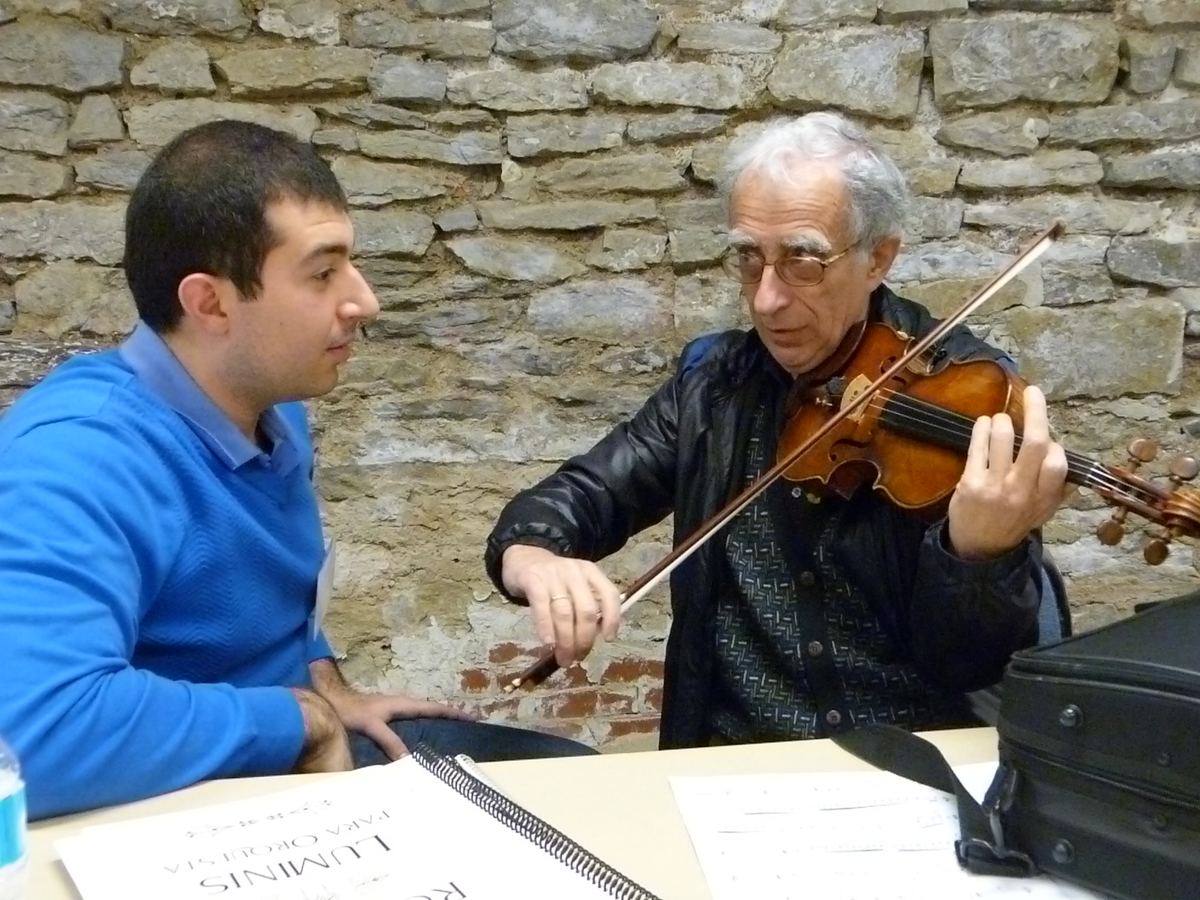
So as a composer, it's nice that you put the down bows and the up bows, but it's wholly unnecessary. In fact, the concertmaster is probably going to cross those out and put their own down bows and up bows. That's part of their job in preparing for a concert.
6. You're using mezzo piano in an orchestral score
The first and second scores had a similar issue, and that's the use of dynamics.
Oftentimes in an orchestral score, you're going to have pianissimo, piano, mezzo piano, mezzo forte, forte and fortissimo. Those are going to be your common dynamics.
However, my teacher, the late Steve Stucky, who was my first composition teacher, would tell us during our master classes that mezzo piano is not a real dynamic marking in orchestral music. Mezzo piano is just something in between piano and mezzo forte, and in an orchestral context, the difference between a mezzo piano and a mezzo forte is not a lot.
That got me thinking. Mezzo piano is its own dynamic, theoretically. But in the context of a huge orchestral hall where there's 2 or 3,000 people sitting there, with all these musicians playing their individual parts, it makes sense that the difference between mezzo piano and mezzo forte is probably not going to be as intense as one might think.
In the second score, the clarinet part starts off with mezzo piano. Then over 2 bars, give or take, there's a gradual crescendo to mezzo forte, at quarter equals 48, which is very, very, very slow.
If you think about it and try to sing that yourself, you have very, very little to grow between the initial start of that pitch and the landing of that pitch.
How to fix it
The dynamics would have a little bit more juice, so to speak, if we started from, let's say, piano or even pianissimo.
That's something that I look for a lot, because it shows me how the composer thinks about dynamics in a piece of music.
7. Your time signature is hard for the conductor to tap through
The third score was in 3/8 with dotted quarter equals 40. Dotted quarter equals 40 is quite a slow tempo. It's a bit slower than the clock.
I'd even dare to say that this piece is probably more in 6/8, like a lazy 6/8, rather than 3/8. Or you can even say it's in 3/4 with quarter equals 120, so each eighth note gets a beat. That would be the same tempo. Just different ways to skin the same cat, basically.
You want to make the time signature as simple as possible for the conductor to tap through. In 3/8 at this tempo, it's very hard to catch where those 2 eighth notes are.
I made this mistake myself
I wrote a clarinet concerto for the Princeton Symphony, right before the pandemic, in 2020, and I did a passage just like this in 3/8. Mine was actually a bit faster.
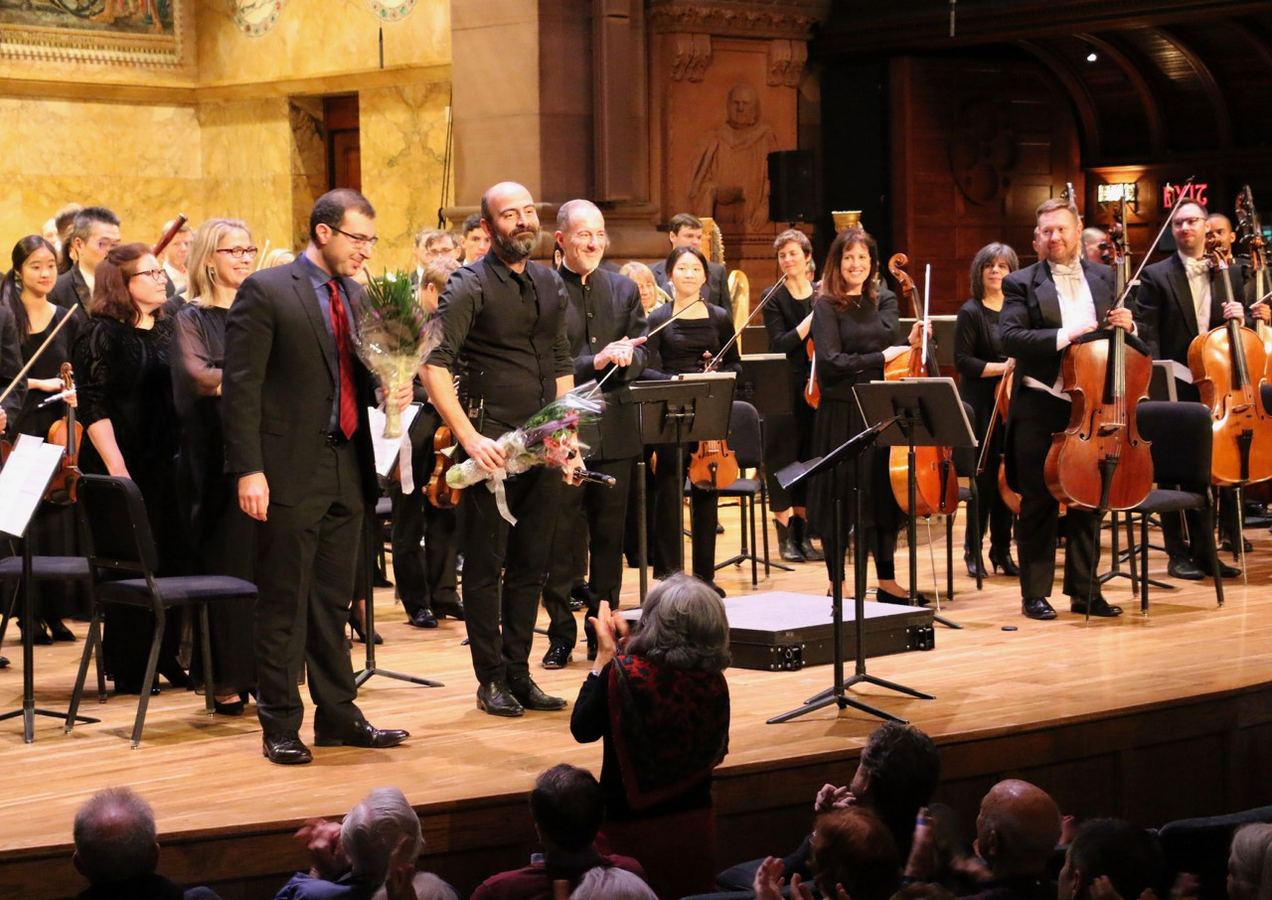
I could see in real time the players getting lost and not knowing where they were, because when the conductor is beating like that, I can't really see where I am in any individual bar. All I see is the downbeats.
How to fix it
One way to fix it is to put it in 3/4 with quarter equals 120. It'll be exactly the same thing.
Or you can keep the dotted quarter equals 40 feel and just put it in 6/8. That way you see a second beat, and you know where you are in the bar.
I've learned this the very hard way. I don't want you to make the same mistake.
8. You're not using as many of the strings as you can
My last tip is less of an engraving thing and more of an orchestration thing, and it's in the strings.
In the third score, at the fifth bar, there were octave Ds in the contrabasses and the cellos, and a D in the violas, one octave higher than the D in the cello.
I find it a little bit strange that we wait until that moment to add the violas. Why not have the violas playing from the beginning? That way all the strings are playing together and they're homogeneous.
How to fix it
If you wanted that kind of ascension to forte, I think it would have been better orchestrationally to start the violas off with all these pitches an octave higher, at pianissimo or piano. Then put a big hairpin to forte.
That way they slowly get to a forte. It would have more of this gel-like, organic nature to it, rather than starting kind of aggressively on the fifth measure.
Why I have as many of the strings playing as I can
When I'm writing string music with the orchestra, as a rule for me, I like to have as many of the strings playing as I can when I'm writing multiple string lines.
The reason is that a professional orchestra, especially if it's not the LA Phil or the Berlin Phil or the New York Phil, is not going to have these giant string sections that you see on YouTube. That's not the norm.
- First violins16
- Second violins14
- Violas12
- Cellos8 or 10
- Contrabass6 or 8
That's not the norm
- First violins10 or 12, if you're lucky
- Second violins8 to 10, if you're lucky
- Violas4 to 6
- Cellos4 to 6
- Contrabass4 players
The norm
That means that for me to get that big orchestral sound that I'm used to hearing with the LA Phil, I'm going to have to have as many of the players playing as possible.
And if a big orchestra like the LA Phil or the New York Phil is playing my music, they can always tone it down, or they can always ask just the outside players or just the inside players to play. It's always easier to remove players than to add players in.
So in an instance like this, where the violas are not doing anything, you might as well have them double up on the cellos and the basses, because they're playing that same line anyway.
What to do next
If you want to know exactly how I'm looking at these scores, you can download my free engraving checklist.