
What I learned from applying to 600 composition contests
Ever wonder what actually helps a composer stand out in competitions? After applying to over 600 contests and sitting on judging panels myself, I've seen what works and what quietly gets ignored. Here are the 7 lessons that really move the needle, and how you can use them to get your music recognized.
 By Saad Haddad, composer
Here's the video this post comes from (13 minutes), or you can read it below.
- Only apply for competitions that fit you
- Don't write a brand new piece for a competition
- Only submit pieces you already have a live recording of
- The biggest warning sign is a high application fee
- For orchestral competitions, adapt a piece you know already works
- Write for people, not for contests
- Use the writing you do for real people as a springboard
1. Only apply for competitions that fit you
This might seem obvious at first, but it's something I see composers struggle with all the time. When this idea is actually implemented correctly, you can save loads of time and boost your chances of winning any competition that you apply to.
It's a simple idea, and it can make a huge difference. For example, say you're a composer whose music is purely inspired by Beethoven and other classical and romantic composers, but you apply to a competition that's basically looking for a modernist aesthetic, a 12-tone kind of aesthetic, a more avant-garde aesthetic. That's not going to be the right match for your personal style.
- Purely inspired by Beethoven
- Classical composers
- Romantic composers
- A modernist aesthetic
- A 12-tone kind of aesthetic
- A more avant-garde aesthetic
Not the right match
Which means that all that time spent putting your application together is virtually wasted.
Ask yourself 1 simple question
Before you start putting together an application for a contest, I want you to ask yourself sincerely 1 simple question. Does this opportunity fit who I actually am as a composer?
If the answer is no, you can move on quickly without wasting hours assembling materials. And if the answer is yes, you'll be applying for a competition that is actively looking for the music of people just like you.
So take your time back by not applying for competitions where you have to change who you are as an artist in order to stand a chance.
The lessons in this post only work if you're applying to the right opportunities at a consistent rate over a long period of time. To make that part easy, I put together a curated list of competitions that you can download for free.
2. Don't write a brand new piece for a competition
Once you've found a competition that fits your style as a composer, there's another lesson that I know a lot of people will be very surprised by. I'll illustrate it with a quick story about one of my own students.
This particular composer found a choral composition contest that matched his style. So he spent a month working multiple hours every single day on a brand new piece that fit the competition. Once he finished the piece, he sent it in for consideration. Then, 3 months later, he heard back that the piece had been rejected.
The problem with this situation is that the only way the piece was going to be performed was if he won that competition. So naturally, because he lost, the score was just gathering dust on his hard drive.
- 1 monthworking multiple hours every single day on a brand new piece
- 3 monthslater, he heard back
- Rejectedthe only way it was going to be performed was if he won
- Hard drivewhere the score was gathering dust
And to actually get a performance of the piece in the future, he'd have to reach out to conductors he knew to see if they were interested, which could possibly take months or even years.
When you write a new piece for a contest, the only plan for getting the piece performed is betting on the fact that you're going to win.
It's simply a numbers game
We need to face reality here. The odds of winning any one single contest are statistically low. This isn't because of your talent or the quality of the piece, per se. It's simply a numbers game.
I recently asked a bunch of my professional composer friends what percentage of the composition contests they submit to they end up winning or making a finalist designation for. The average is about 10%.
That means that even composers who are getting commissions and performances all the time don't win more than 1 in 10 of the competitions they submit to. Which means only 10% of those submissions are actually getting performances by musicians.
So if you write a new piece for every competition you submit to, and it takes you a month to write each piece, you might spend a year just writing music without knowing if any of it is going to get played.
Writing yourself into a corner
There's actually another huge issue with writing new pieces for a competition, and that is other performers probably aren't going to want to play it.
A lot of competitions have very specific rules for the types of pieces they accept. So if you write something to fit those specific rules, but the piece doesn't get selected, getting the piece performed means finding performers who like exactly the same type of thing and have the same kind of parameters in mind that that competition had.
I call this writing yourself into a corner. You've created a very specific piece for a performance you weren't selected for.
3. Only submit pieces you already have a live recording of
This is what you should absolutely do instead of writing brand new pieces for competitions. It's probably the lesson that did the most to boost the number of competitions I was selected by.
When you're on the other side of the equation, serving as a judge on these contests, you have to spend hours and hours and hours listening to hundreds of audio files and studying hundreds of scores. From this pool of hundreds of pieces, you usually need to select 5 to 10 pieces that stand out in order to be considered for the prizes.
What makes a piece stand out to a judge?
Really, it's just 2 things. Number 1, a score that looks professionally engraved, which shows that the composer takes their work seriously. And 2, an audio recording of the piece played by live musicians, which shows that other musicians already take the piece seriously.
- Looks professionally engraved
The composer takes their work seriously
- Played by live musicians
Other musicians already take the piece seriously
Any submission you send needs to have at least 1, if not both, of these attributes to be especially competitive among hundreds or even thousands of applications.
This is why I believe it's imperative that you only submit pieces you already have a live recording of. A live recording beats MIDI playback every time, and not just in terms of how good it sounds.
A live recording beats MIDI playback every time.
That's because when a real musician plays your work, the nuances and interpretation they give to the music help turn your composition from notes on a page into a piece with artistic vision. And that artistic vision is exactly what judges want to see from the pieces they select as the winners and finalists.
4. The biggest warning sign is a high application fee
So far I've spent a lot of time on things that help you figure out if a competition is the right fit for you. But it's also important to know the biggest warning sign for the totally wrong type of competition.
It's not that the competitions I'm about to talk about are bad or scams or anything like that. But if you want to use composition competitions as a way to get more performances of your work, there is a particular type of contest that doesn't normally move you toward that goal. That type of contest is one where the application fee is higher than about $50.
With a lot of these competitions that have a high application fee, that money is going toward a few things: offering a cash prize to the winner, hiring more prestigious judges for the competition, or boosting the prestige of the institution hosting the competition so that more people want to apply.
Again, these aren't necessarily bad things, but they only help a few people: the winner, the judges and the institution. Most people that submit their pieces aren't going to win, which just means they're out $50 to $100 or even more per contest entry.
Compare the 1 competition you could submit to for $100 versus 10 competitions you can submit to for $10 each. Which investment of $100 is more likely to yield the outcome you want?
- 1 competition
- Entry fee$100
- 10 competitions
- Entry fee$10 each
So before you apply to a competition with a high application fee, think carefully about if it aligns with your goals as a composer.
When the entry fee was a no-brainer
I've definitely applied to contests with entry fees over $50. In fact, I've actually won one of these contests where the entry fee was $75, and that was so that I could be the California Symphony's new composer in residence.
When I applied for that particular competition, I felt like it aligned really well aesthetically with what I wanted to do as a composer. I already had a very strong orchestral portfolio at that time, which made me, in my own mind, a good candidate for that position. So I felt like I wasn't shooting in the dark.
And I thought, if I won with that $75, the payback would be commissions, as well as 3 premieres of 3 different pieces of mine over 3 years. That investment of $75 was a no-brainer in comparison to the amount of return I would get from it.
So think very clearly and logically about what you're going to do, especially when you have these entry fees that are higher than $50. They usually run between $50 and $100 for one of these contests.
5. For orchestral competitions, adapt a piece you know already works
This lesson I learned the very hard way. In my undergrad, I spent 7 months writing a 7-minute orchestral piece for a contest being held at my school.
The good news is that it did get performed. But afterwards, I realized something really scary. At that pace, I could only finish 1 or 2 pieces a year and just hope they get picked up.
I don't know about you, but to me, that's not a strategy. That's what I call a lottery ticket.
So I changed my entire approach. The very next orchestral piece I submitted to competitions was a piece called Kaman Fantasy, which clocked in at about 12 minutes. And the part that might surprise you is that this piece took me not 7 months to write, but just 6 weeks.
- A 7-minute orchestral piece
- 7 months writing
- For a contest being held at my school
1 or 2 pieces a year
- About 12 minutes
- Just 6 weeks
- Began as a work for violin and piano
Selected to multiple competitions
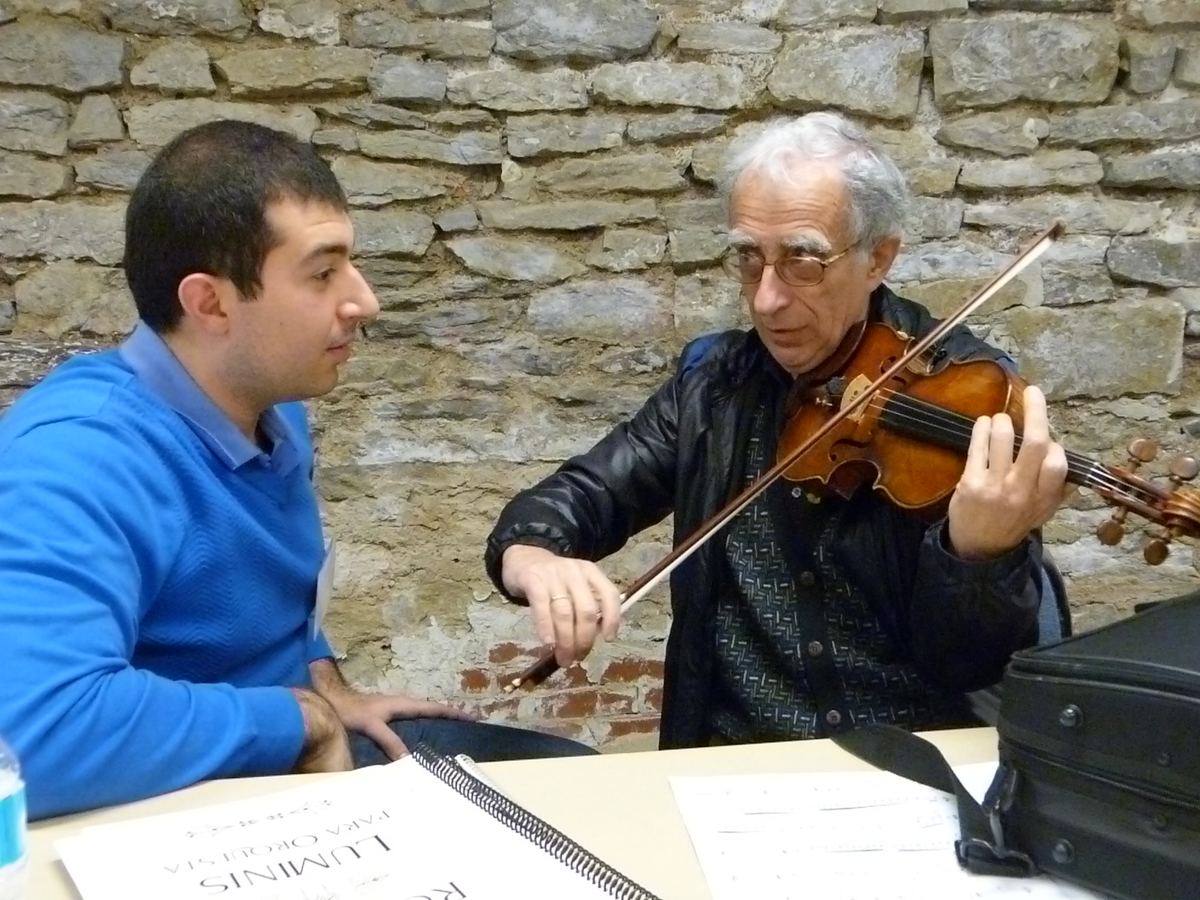
And not because I rushed the process, but because I didn't start out trying to write for orchestra. In fact, this piece began as a work for violin and piano, which I got to hear performed live before I had the idea to arrange it for a full symphonic orchestra.
That single shift got that piece selected to multiple competitions held by the Milwaukee Symphony, the Columbus Symphony and Symphony in C. If I had tried to compose that piece directly for orchestra from scratch, it probably would have taken close to a year at that point.
What I tell my private students
Only submit to orchestral competitions if you either already have an orchestral piece, or you have 6 plus weeks to adapt a chamber piece you know already works. Anything else is usually just slow, expensive guessing.
6. Write for people, not for contests
This might be the most important lesson of them all. A lot of composers I personally mentor barely apply for composition contests at all.
Don't get me wrong. Contests can be important opportunities to get your music performed and be considered for future commissions with ensembles that you otherwise wouldn't have access to. But when you're just getting started building your career as a composer, focusing solely on contests can end up being a waste of your precious time.
That's because the things that boost your chances of winning competitions the most are applying to competitions that match your style as a composer, submitting your strongest pre-existing pieces, and submitting live recordings of your pieces.
And when you're just getting started as a composer, your portfolio is small. You have few, if any, live recordings of your pieces. And you might not even know what style of music you want to write in.
- Competitions that match your style
- Your strongest pre-existing pieces
- Live recordings of your pieces
- You might not even know what style you want to write in
- Your portfolio is small
- Few, if any, live recordings
So basically, this means that your chances of actually winning a competition, and getting a return on the investment of all the time you've put in, are relatively small. This is exactly why I tell all the composers I work with to write for people, not for contests.
The basic framework
Implementing this lesson actually produces much more straightforward and predictable results than just crossing your fingers and hoping for the best.
At a basic level, all you need to do is identify musicians in your area you'd love to work with, build that trust with them by going to their concerts and getting to know them, and ask to write a piece for them.
- Identifymusicians in your area you'd love to work with
- Build trustby going to their concerts and getting to know them
- Askto write a piece for them
By following this basic framework, you can build your portfolio, get recordings of pieces made by real musicians, and sharpen your understanding of what you actually want to write.
7. Use the writing you do for real people as a springboard
Once you have this strong portfolio, recordings of your pieces, and an understanding of your compositional aesthetic, you can implement my 7th and final lesson. Use the writing you do for real people as a springboard for strong contest submissions.
If you're looking for the one biggest takeaway, it's this. A lot of composers start applying for contests before they have a solid foundation in place for their career. By redirecting your focus to the musicians in your personal community, you'll build out exactly the foundation you need to have the best chance of winning these contests.
Because remember, building a career in composition isn't about having a bunch of prestigious awards you can list in your bio. I have a bunch of them, and I have a bunch of plaques and awards, but the walls in my studio are completely empty.
I don't really care about any of that stuff, because when I'm writing, those awards are not going to help me. Those honors are not going to do a damn thing for the next piece that I write.
So this is not going to be the goal for you when you're building your career. The goal really is to make sure that you're writing one good piece after another good piece for live performers that want to play your music.
What to do next
If you want to grab the list of contests that I use, download my curated list of competitions for free.