
Why well-crafted music isn't enough to get you commissions
I spent years mastering harmony, counterpoint and orchestration at conservatories like Juilliard, but was still rarely offered commissions for new work. Here's why well-crafted music isn't enough to get you commissions, and the 3 things I wish I knew sooner, so you don't keep getting passed over again and again.
 By Saad Haddad, composer
Here's the video this post comes from (9 minutes), or you can read it below.
- Just being good at crafting music isn't enough
- An arsenal of technique doesn't guarantee direction
- You don't need to know everything
1. Just being good at crafting music isn't enough
This first thing I wish I knew sooner is going to enable you to get your first commission, so you don't keep getting passed over again and again.
I want to be really clear up front about this. This is not just about attaining the perfect compositional technique. Technique is important, obviously, but at the end of the day, it's not what makes people say yes to your music.
I know that sounds crazy, but let me put it this way. When you walk into a bookstore, you're not just picking up a good book. You're looking for a voice you connect with, a genre you love, a story that feels like it was written for you.
Musicians, ensembles and artistic directors are doing the exact same thing when they're programming concerts. They're not just looking for well-crafted music. They're looking for music that strikes a chord, no pun intended, with the audiences they're trying to attract.
- A voice you connect with
- A genre you love
- A story that feels like it was written for you
- Something clear
- Something with identity
- Something that fits into the story these musicians want to tell
These audiences might be more attuned to mainstream classical composers like Vivaldi or Mozart, or more niche music from composers from the Fluxus or new complexity movements, or somewhere in between. I've seen commissions given to all sorts of music. It really doesn't matter where you fall on that spectrum.
The main thing is that you need to be writing something clear, something with identity, something that fits into the story that these musicians want to tell. And that's where aesthetic comes in.
Your aesthetic is your musical fingerprint. It's the thing that makes your work stand out in a sea of good music.
An example from my own music
I'm always blending traditional Arabic music with Western classical idioms and forms. That fusion shows up in every piece I write, whether it's for large groups like the Los Angeles Philharmonic or smaller chamber ensembles like the Imani Winds.
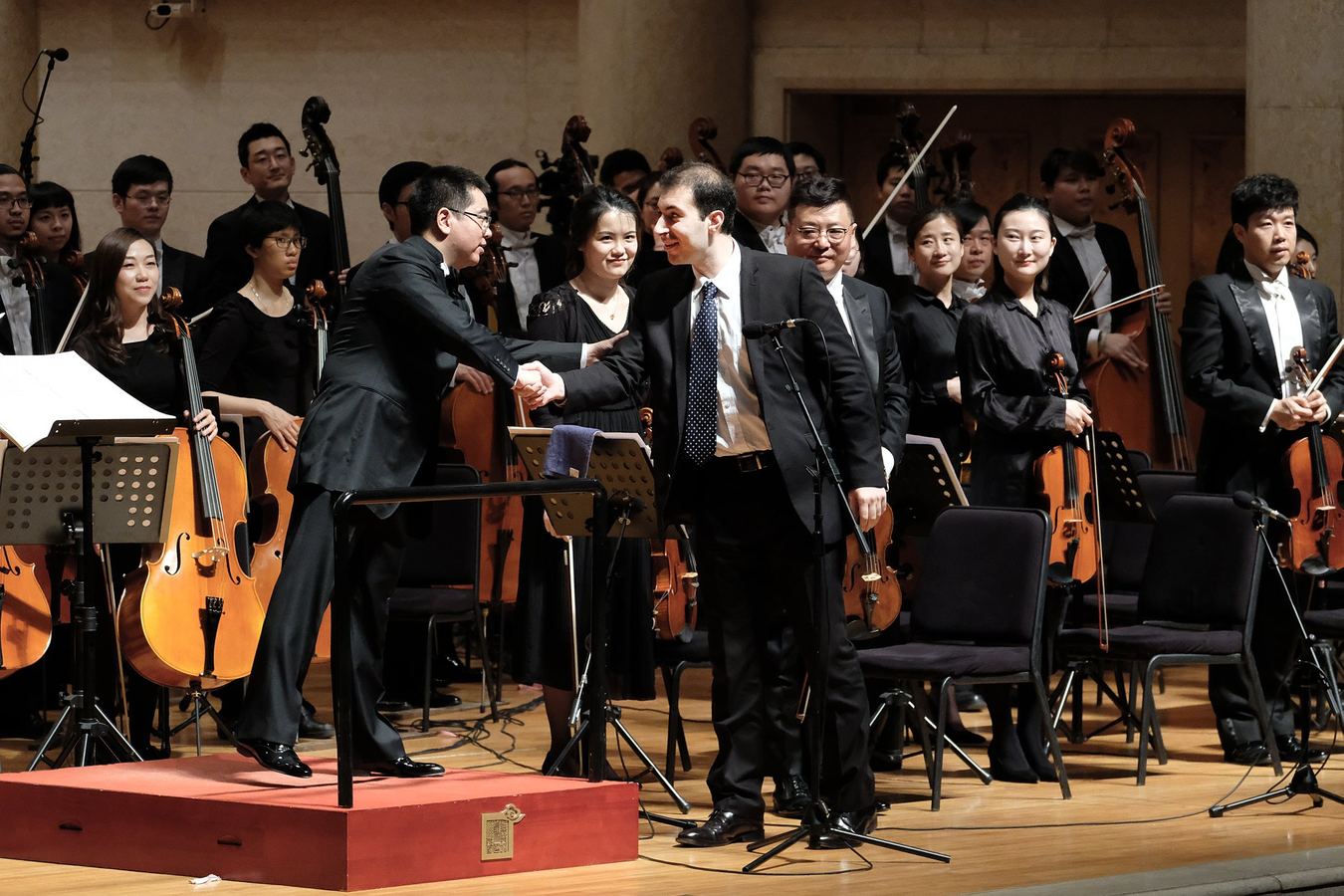
But that mix of influences never combines in exactly the same way. It's a deep well I keep drawing from, and it's helped me stay focused instead of bouncing between styles trying to be everything to everyone.
Once that aesthetic became clear, everything else got easier. Ensembles knew what I was about. I started getting more commissions, more performances.
In one season alone, I had my music played all over the world, including in places like Belgium, Italy, and here in the United States, from California to Utah, Texas to Massachusetts.
And maybe most importantly, I started feeling much more fulfilled in the music I was making.
Ask yourself 3 questions
This could absolutely work for you, too. What I want you to do is ask yourself 3 questions.
Number 1, what unique mix of influences or traditions shows up in your music? Number 2, what kind of emotional experience are you trying to create for your audience, if any? And 3, which performers or ensembles naturally align with the kind of music you're writing or want to write?
- Influenceswhat unique mix of influences or traditions shows up in your music?
- Experiencewhat kind of emotional experience are you trying to create for your audience?
- Performerswhich performers or ensembles naturally align with the kind of music you're writing?
- Your aestheticstarts taking shape
Once you start answering those questions, your aesthetic starts taking shape.
If you want to follow along with my process, you can do so by downloading my free guide.
Communicate it everywhere
Once your aesthetic is clear, communicate it everywhere: in your bio, on your website, and in the conversations you're having. Most of all, make it easy for people to know who you are and why your music belongs on their stage.
Your aesthetic isn't just your sound. It's your identity. And that identity is what gets you programmed, what gets you recognized, and what ultimately builds a fulfilling career in concert music.
2. An arsenal of technique doesn't guarantee direction
The next thing I wish I knew sooner would have enabled me to learn the right tools to land my first commission.
I spent 12 years as a music student in academia. You'd think that after all that time, our programs would be laser focused on giving us the tools that directly lead to our first commission. But at least in my experience, that wasn't really the case.
Out of those 12 years, maybe 2, possibly 3, were seriously spent figuring out what kind of music I genuinely wanted to write. And even then, I had to push for it myself.
What I realized was that most composition programs are built to make you technically strong. There's no doubt about that. You'll write fugues in the style of Bach. You'll analyze every musical form under the sun.
All of that is valuable, by the way. It gives you the essential tools. But here's the big catch. An arsenal of technique is definitely important, but it doesn't guarantee direction. You can graduate with honors and still have no idea what kind of music only you can create.
I see this all the time: composers who can write flawless counterpoint, but feel completely lost when someone asks, "What do you want to say with your music?"
So what happens next? You leave school. You have a polished portfolio in hand. And then you quickly realize no one's banging down your door with your first commission.
You've been trained to write correctly, but not necessarily to create music that deeply moves a specific audience. Music that sticks, that gets shared, talked about, and programmed again and again.
Without a clear artistic identity, your work simply blends in. Then the doubt sets in, and you start thinking, maybe I need another degree. Maybe I just need to learn a bunch more music theory. Or maybe I'm just not cut out for this.
The real turning point
But here's the real turning point, and it's simpler and more powerful than you might think. It happens when you stop trying to impress your professors, or anyone else for that matter, and start figuring out what is the music that excites you. What do you believe in? And what do you want your music to accomplish in the world?
- Write fugues in the style of Bach
- Analyze every musical form under the sun
- Write flawless counterpoint
Trained to write correctly
- What is the music that excites you?
- What do you believe in?
- What do you want your music to accomplish in the world?
Music that only you could have written
The answers to those questions will enable you to get your first commission. Not from writing the perfect fugue, but from writing music that only you could have written.
3. You don't need to know everything
The last thing I wish I knew sooner is about practically finding your own aesthetic, and how doing that is what actually leads to landing your first commission.
I can't tell you how many composers I've heard feel like they have to try to write in every style out there before they can find their own voice. And I absolutely get it. It feels like the right thing to do at the moment. Learn everything. Be as versatile as possible. Cover your bases.
But honestly, I've found that kind of thinking actually holds a lot of composers back. They feel this enormous pressure to learn every technique, chase every trend, and then they wonder why they're stuck, why their music doesn't quite land, and why they ultimately are not getting asked to write anything new.
Here's what I wish someone told me sooner. You don't need to know everything. In fact, trying to know everything will just paralyze you.
It's the paradox of choice. This basically means that the more options you have, the harder it becomes to choose. And it's the same with aesthetics. When you're dabbling in 10 different styles at once, you don't get better. You get overwhelmed. You get directionless.
Start small and go deep
So what do you do instead? You start small and go deep. Pick 2 or 3 aesthetics that genuinely excite you. I'm talking about styles where, when you hear them, your whole body reacts. You lean in, and it makes you want to make something.
Then study them. Not in a passive, surface-level way, but really study them. How does the rhythm function in this style? What about harmony, form, timbre, pacing? Ask, why does this music hit you in the way that it does?
Once you do that, start picking out the elements that resonate most with you. Maybe you love the rhythmic energy of one, the harmonic language of another, and the timbral palette of the third.
- Pick2 or 3 aesthetics that genuinely excite you
- Studyhow rhythm, harmony, form, timbre and pacing function in this style
- Pick outthe elements that resonate most with you
- Road mapbased on your own personal biases
Now you're building something that's based on your own personal biases. That is what I call your aesthetic road map.
Your aesthetic, by the way, isn't a fixed label. It's just your personal way of handling melody, harmony, rhythm, timbre and form. And it evolves over time.
But the more clearly you understand it, the easier it becomes for other people to get your music, too. To remember it, and to ultimately want it.
Here's what I've discovered over the last couple decades of composing music. Focus is more powerful than volume. And depth is more valuable than breadth.
You don't need to master everything. You just need to master your thing.
And when you do, that's when musicians and ensembles will start reaching out. That's when you'll land your first commission. Not because you're the most versatile composer in the world, but because you've got a voice they can recognize and believe in.
What to do next
If you want to make this process even easier and more streamlined, download my free guide on how to write music that gets performed so that you can work this out on your own.