
How to self-publish your music once the piece is done
You've already composed the piece, and you've already collaborated with the musicians to make it the best that it could be. Now it's time to sell it. I'll go over what self-publishing is, why you should self-publish your music and how to do it.
 By Saad Haddad, composer
Here's the video this post comes from (9 minutes), or you can read it below.
- What self-publishing actually means
- Why should you self-publish?
- Make sure your piece is actually publisher ready
- Get someone, or yourself, to play and record it
- Put your score and recording up on your own website
- Register the work for performance royalties
- Choose what's important and doable for you
1. What self-publishing actually means
Before we define what self-publishing means, we have to be upfront with what the term "publishing" actually means.
When I headed over to Merriam-Webster, they defined publishing as "the business or profession of the commercial production and issuance of literature, information, musical scores, or sometimes recordings or art." There are 3 main parts of this definition that catch my attention.
This is a business
It has nothing to do with your music or how you create your music. The business of self-publishing your music is a completely separate endeavor, and you should strive to keep it that way.
This is a commercial production
In other words, there are goods and services being rendered in the process of publishing your music. The most obvious way this is carried out is the actual production, digital and physical, of your scores and parts.
The issuance of the music itself
How is the music itself being disseminated? If we're just talking about sheet music, are these materials being emailed or physically mailed? How are prices being set? How are you handling the billing?
If we consider that all 3 of these key steps are being done by the composer, rather than some other separate entity, we get to the term that we're all familiar with: self-publishing.
Even though it might sound like a lot to hear at first, there have been many examples of composers that have been able to do this: Jennifer Higdon, John Mackey, Alex Shapiro, and the list goes on and on. It's not uncommon to be a self-published composer anymore.
2. Why should you self-publish?
Remember, publishing is a business. Composing is not.
It's important to separate these 2. If you self-publish your work, you keep 100% ownership of your scores. This entitles you to have 100% say of when and how your work is performed.
It also allows you to retain 100% of any royalties that may result from the sales of any of your sheet music or performances of your work.
If you sign a deal with a traditional publisher
To be fair, if you're working with a traditional publisher that really advocates for your work, there's a good chance that they could potentially get more of a commission fee for you for any new work than you could have done on your own.
Just be careful, though, because most publishing houses are going to want you to sign away all your work to them. If there's a situation in the future where you want to get out of the deal, you're going to have to buy back all the copyrights to the works that you already composed.
If you want to get out of the deal, you're going to have to buy back all the copyrights
I'm happy to self-publish my own music
So personally, I'm happy to self-publish my own music.
3. Make sure your piece is actually publisher ready
How should you self-publish your music? There are a lot of steps to this process, but I'm going to be as succinct as I can. Step 1: once your piece is done, make sure it's actually publisher ready. What does that mean exactly?
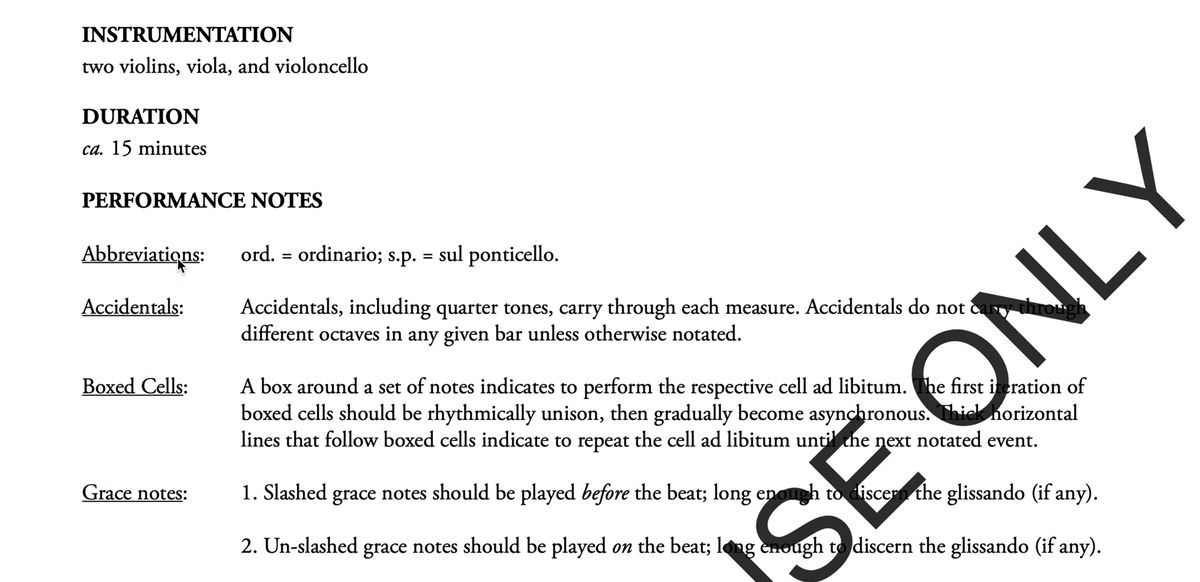
For starters, you need to make sure the score and parts themselves are engraved to a professional standard. If you need some help with that, there's a great book I've recommended before called Behind Bars.
Once you do that, make sure to come up with a title page that fits your personal aesthetic.
The final touch is a preface page
This is the page that goes between the title page and the actual sheet music. The preface page would have the instrumentation, whether the score is transposed or in C, performance notes for the players and, finally, a program note.
4. Get someone, or yourself, to play and record it
Step 2 is to make sure you get someone, or yourself, to play and record the piece of music. Then upload it to a place like YouTube or SoundCloud, or any other platform that you enjoy using.
5. Put your score and recording up on your own website
Step 3 is putting your score and recording up on your own personal website. I'm not going to go over how to build a website. Rather, I'm going to show you how you should present each of your newly published works on it.
At the top, clearly list 4 essential parts that anyone interested in programming this piece would need to know: the work's title, the date of composition, its duration and its instrumentation.
On the page for my String Quartet No. 2, I had 2 buttons right below that. The first button linked to a PDF of the entire score, with a big watermark strewn across it. If folks wanted to buy the piece, they could head over to the second button, which linked to an order form that showed exactly what to do, step by step, to actually purchase the score and parts.
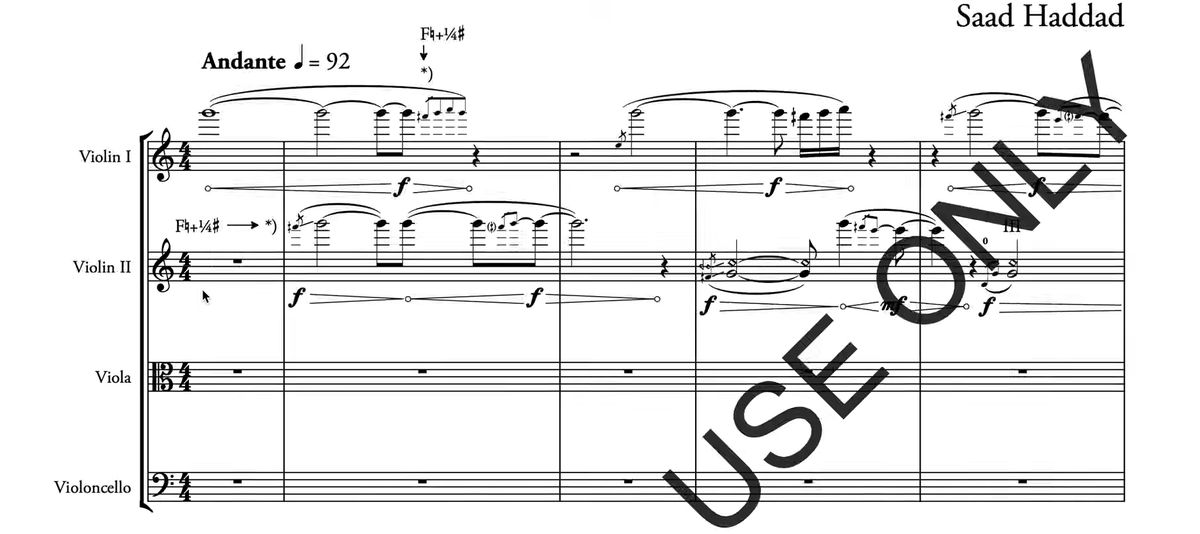
Right below those buttons goes a recording of the piece that anyone can listen to. And below that, there's some additional information about the commissioner, the premiere date and the program notes.
Now it's time to sell it
We already said the first part of being your own publisher is the fact that this is a business. Just the fact that you see that I'm selling my work shows what the page's purpose is.
I've already composed the piece. I've already collaborated with the musicians to make it the best that it could be. So now it's time to sell it, plain and simple.
6. Register the work for performance royalties
Besides selling the sheet music, the other way we can make money from a piece is to sign up with your local performing rights organization and then register the work with them. Then, after the performance, send them the brochure that shows the program of the piece.
- 1Sign upWith your local performing rights organization.
- 2Register this workWith them.
- 3After the performanceSend the brochure that shows the program of the piece.
The larger the ensemble, the larger the payout
I'll show you an example. When I looked at a breakdown of my performance royalties over several years, at the very top was a piece called Kaman Fantasy, originally for violin and piano, which I also adapted for orchestra.
The next one was Takht, which is in 2 versions, one for sinfonietta and one for full orchestra. The other 3 pieces also happened to be for orchestra. So the larger the ensemble, the larger the payout.
It has nothing to do with the quality
This has nothing to do with the quality of your compositions. Just because you think one piece is better than any other in your catalog doesn't mean that piece is going to provide you with the most performances, and hence the most royalty income.
For example, there were works of mine that I thought were way better in terms of quality than the ones at the top. But like I said, this has nothing to do with how you're compensated for those pieces.
7. Choose what's important and doable for you
After you've done all of this, you might be wondering, is there anything else I need to do? The short answer is yes. There's always something you can do as a composer that is self-published. It's just a matter of delegating how much time in the day you want to spend doing those things.
What I just covered is the basic nuts and bolts of what you have to do to present your music in a way that makes someone who doesn't know your music at all assess whether they want to program it or not.
My philosophy, though, is to choose what's important and doable for you. For me, I had identified 3 main things that were essential for my self-publishing business. Number 1 was making sure my website was completely and utterly up to date, not just with my catalog, but also with upcoming events and news articles. Number 2 was my monthly email newsletter. And number 3, of course, was my YouTube channel.
- Number 1My website, completely and utterly up to date
- Number 2My monthly email newsletter
- Number 3My YouTube channel
What to do next
If you want to make sure your own website is ready for the performers browsing it, start with my free website checklist.